

The ICJ’s Myanmar Judgment: Could One Verdict Change the Future of the Rohingya?
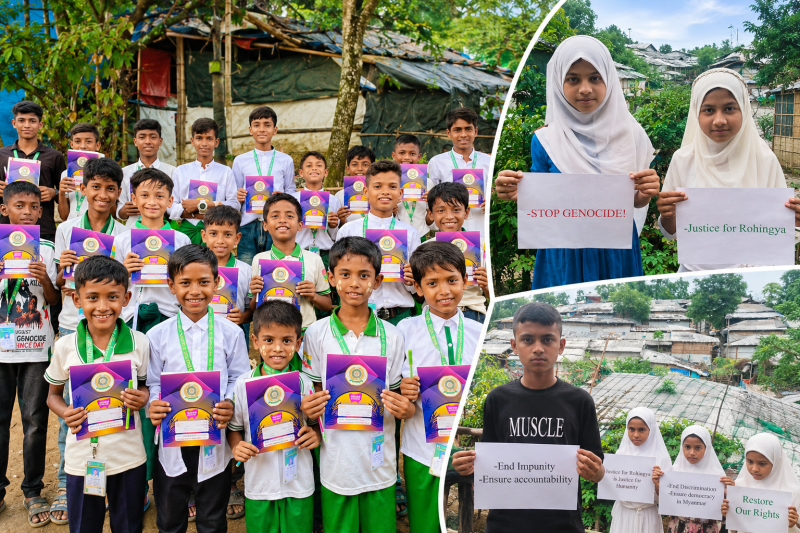
Nearly a decade after hundreds of thousands of Rohingya fled violence in Myanmar, the world’s highest court is preparing to deliver a landmark judgment that could reshape the international response to one of the world’s longest-running refugee crises.
On November 19, the International Court of Justice (ICJ) is scheduled to deliver its judgment in The Gambia v. Myanmar, a case examining allegations that Myanmar violated the 1948 Genocide Convention through its treatment of the Rohingya community.
For more than one million Rohingya refugees living in Bangladesh, many of whom have spent almost nine years in overcrowded camps, the judgment represents more than a legal decision. It carries hopes for recognition of their suffering, accountability for those responsible, recognition of their identity and, ultimately, the possibility of returning home safely and with dignity.
But the significance of the judgment extends far beyond the Rohingya community. Governments, international organisations, human rights groups and legal experts are watching closely to see whether the ruling could become a turning point for international justice.
The central question is no longer simply whether the Court will establish Myanmar’s responsibility. It is whether the international community will have the political will to turn a legal judgment into meaningful action.
A case that brought the Rohingya crisis before the world
The Gambia filed proceedings against Myanmar at the ICJ in November 2019, alleging violations of the country’s obligations under the Genocide Convention.
The case concerns the Myanmar military’s so-called clearance operations in 2016 and 2017, particularly in northern Rakhine State. During those operations, allegations emerged of mass killings, sexual violence, village burnings and widespread forced displacement.
More than 700,000 Rohingya fled to Bangladesh following the 2017 military crackdown, joining earlier waves of refugees. Bangladesh now hosts more than one million Rohingya refugees.
Myanmar has denied the allegations of genocide, describing its military operations as legitimate counter-insurgency measures.
In January 2020, the ICJ ordered Myanmar to take provisional measures to prevent acts prohibited under the Genocide Convention and preserve evidence. Hearings on the merits of the case were subsequently held at the Peace Palace in The Hague from January 12 to 29, 2026.
The Court is now preparing to deliver its judgment after months of deliberation.
International attention and the question of accountability
The approaching judgment has drawn attention from leading human rights and legal organisations, many of which believe the case could have consequences beyond Myanmar.
Human Rights Watch has described the proceedings as an important opportunity to challenge impunity for alleged atrocities against the Rohingya. It has also raised concerns about the continued persecution and restrictions faced by the community inside Myanmar.
Physicians for Human Rights has highlighted the importance of the case for survivors of sexual violence, children affected by alleged atrocities and people living with long-term physical and psychological injuries. Fortify Rights has focused on the experiences of Rohingya survivors whose testimonies have helped bring the case to international attention.
Legal Action Worldwide and the Special Advisory Council for Myanmar have stressed that the judgment should be followed by concrete diplomatic and political measures. They warn that international recognition without implementation would leave the underlying crisis unresolved.
The British Institute of International and Comparative Law has also highlighted the wider legal implications, particularly how the Court’s interpretation of the Genocide Convention could influence future international proceedings.
Eleven countries—Canada, Denmark, France, Germany, the Netherlands, the United Kingdom, the Maldives, Slovenia, the Democratic Republic of the Congo, Belgium and Ireland—have formally intervened in the case under Article 63 of the ICJ Statute.
Evidence gathered by the UN Independent International Fact-Finding Mission on Myanmar and the Independent Investigative Mechanism for Myanmar has also contributed to broader international accountability efforts.
Together, these developments show that the case is no longer simply a legal dispute between two countries. It has become a test of the international community’s commitment to preventing and responding to genocide.
Bangladesh and the hopes of the Rohingya
For Bangladesh, which hosts more than one million Rohingya refugees, the judgment carries particular importance.
The country has repeatedly called for international accountability and a sustainable solution to the refugee crisis. Bangladesh has also challenged Myanmar’s use of the term “Bengalis” to describe the Rohingya, arguing that it denies their distinct ethnic identity and portrays them as illegal migrants.
Bangladesh maintains that the Rohingya are an established ethnic community with deep historical roots in Rakhine State.
Its position is that accountability must go hand in hand with the creation of conditions for safe, voluntary, dignified and sustainable repatriation.
For Rohingya refugees and activists, however, the issue goes beyond the legal language of the judgment.
Rohingya activist Nay San Lwin has stressed that meaningful justice must include citizenship, equal rights, recognition of their ethnic identity and the ability to return safely to their original villages.
Wai Wai Nu, executive director of the Women’s Peace Network-Myanmar, has welcomed the involvement of the eleven countries and called for stronger international action to address alleged ongoing atrocities in Rakhine State.
Yasmin Ullah, founder of the Rohingya Maiyafuinor Collaborative Network, has warned that the Rohingya must not be reduced to a legal test case.
Maung Sawyeddollah, founder of the Rohingya Students Network, has also worked to bring Rohingya voices into international media coverage by connecting journalists with community leaders, youth advocates and survivors.
The United Council of Rohingya, represented in refugee-camp advocacy by Acting President and panel member Khin Maung, has likewise emphasised accountability, human rights and safe, dignified repatriation.
The Arakan Army factor: A changing reality in Rakhine State
Even if the ICJ delivers a strong judgment against Myanmar, implementing its consequences on the ground will not be straightforward.
The military and political situation in Rakhine State has changed significantly since 2017. The Arakan Army (AA) now controls substantial areas of the state, creating new challenges for civilian protection, humanitarian access and potential refugee repatriation.
The changing balance of power does not, however, erase Myanmar’s legal responsibilities.
The ICJ case concerns the responsibility of the State of Myanmar under the Genocide Convention for alleged violations linked to the military operations of 2016 and 2017. Subsequent changes in territorial control do not, by themselves, remove that responsibility.
At the same time, the changing situation raises a difficult practical question: who will guarantee the safety of Rohingya refugees if they return to areas no longer controlled by Myanmar’s military authorities?
There are also serious allegations of human rights abuses against Rohingya civilians in areas under Arakan Army control. These include alleged restrictions on movement, forced labour, arbitrary detention and land confiscation. Such allegations require independent investigation and should not be treated as established findings without verification.
The situation suggests that a sustainable solution may require engagement not only with Myanmar’s central authorities but also with actors exercising effective control over areas where Rohingya communities once lived.
The international community must ensure that the Rohingya are not left trapped between competing armed actors while continuing to face insecurity, discrimination and exclusion.
How could the judgment trigger a domino effect?
The ICJ has no police force, military or independent enforcement agency. It cannot directly arrest Myanmar’s military leaders or organise the return of refugees.
However, a judgment establishing Myanmar’s responsibility for genocide could trigger consequences across international law, diplomacy, criminal accountability and economic relations.
First, it could provide a stronger legal foundation for holding Myanmar accountable under the Genocide Convention.
Second, it could intensify pressure on other countries to fulfil their obligations to prevent and punish genocide. Those obligations do not begin only after a final judgment. However, an authoritative ruling could increase scrutiny of governments maintaining military, financial or diplomatic relationships with Myanmar.
Third, the judgment could influence wider efforts to pursue criminal accountability.
The ICJ and the International Criminal Court (ICC) have different mandates. The ICJ determines the responsibility of states, while the ICC prosecutes individuals accused of international crimes.
An ICJ judgment would not automatically result in arrest warrants against Myanmar’s military commanders. However, its findings could strengthen the wider body of evidence and legal analysis relevant to accountability efforts.
National courts exercising universal jurisdiction may also provide additional avenues for prosecution. Proceedings and legal initiatives in countries including Argentina, Germany and Indonesia reflect broader efforts to pursue accountability for alleged crimes against the Rohingya.
Economic pressure could form another part of the potential chain reaction.
A finding of genocide could increase calls for targeted sanctions against military-linked businesses, individuals, financial networks and entities alleged to support military operations. Governments could also face renewed pressure to review arms transfers and economic relationships that may contribute to further violations.
The judgment could also influence Myanmar’s political future.
The National Unity Government (NUG) has expressed support for the ICJ process and made commitments concerning discriminatory policies. A stronger international accountability framework could increase pressure on emerging political forces to demonstrate that a future democratic system would include the Rohingya as equal citizens.
Any political transition that continues to exclude the Rohingya risks reproducing longstanding injustices under a different political arrangement.
The Security Council and the limits of enforcement
One of the biggest obstacles to turning the judgment into action could be international politics.
Under Article 94(2) of the UN Charter, a party to a case may bring a failure to comply with an ICJ judgment before the UN Security Council. The Council may then make recommendations or decide on measures to give effect to the judgment.
However, the veto power held by the five permanent members—the United States, the United Kingdom, France, Russia and China—could complicate enforcement.
The 1986 Nicaragua v. United States case illustrates how a permanent member can block Security Council action concerning an ICJ judgment.
In Myanmar’s case, China and Russia maintain significant diplomatic, economic and military relationships with the country. Their positions could make it difficult to secure stronger enforcement measures through the Security Council.
But a possible veto does not mean international accountability efforts would come to an end.
An ICJ judgment would remain legally significant. Individual countries could still pursue targeted sanctions, diplomatic restrictions and other lawful measures. International investigative mechanisms and national courts could also continue their work.
The real test begins after November 19
For Bangladesh, the immediate priority remains the safe and dignified return of Rohingya refugees.
For international human rights organisations, the challenge will be ensuring that the judgment leads to concrete accountability.
For Rohingya survivors and their families, the expectations are more fundamental: citizenship, freedom of movement, security, recognition of their identity and the right to live without fear.
These demands cannot be separated.
A repatriation programme without citizenship and equal rights would not resolve the crisis. A judgment without meaningful accountability could leave those responsible beyond the reach of justice. And discussions about Myanmar’s political future would remain incomplete if the Rohingya continued to be excluded.
The international community must therefore ensure that Rohingya representatives—including women, young people, survivors and civil society organisations—are directly involved in decisions concerning their future.
The judgment must become the beginning of a sustained process, not another historic announcement followed by international silence.
The first domino may fall in The Hague. What follows will define the future.
On November 19, the world will hear what the judges have decided. But for the Rohingya, the real question will be whether that decision brings them any closer to the country they were forced to leave.
A court can establish legal responsibility. Governments must turn that responsibility into action. And the international community must ensure that the Rohingya are not once again left waiting.
After nearly a decade of displacement, the Rohingya need more than sympathy, statements and promises. They need recognition of their identity, restoration of their rights, accountability for those responsible and a safe path home.
Justice must not end at the doors of the Peace Palace. It must reach the people who have waited so long for it.