
Rohingya Youth Dialogue 2026 Brings Community Voices and Policy Priorities to the Fore
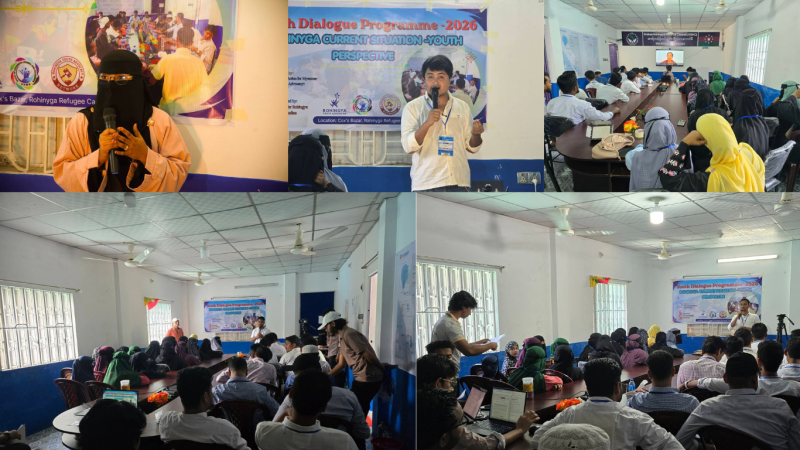
Nearly 100 Rohingya community advocates, human rights activists, youth leaders, women representatives, students, and civil society actors gathered in Ukhiya on Saturday for the Rohingya Youth Dialogue Program 2026, a youth-led platform focused on bringing Rohingya lived experiences into humanitarian policy discussions and future advocacy.
The dialogue, held under the theme “Rohingya Youth Voices: From Lived Experience to Policy Action,” was hosted by Youth Action for Myanmar (YAM) in collaboration with four Rohingya-led organizations: Rohingya Youth Association (RYA), Rohingya Youth Advocacy Network (RYAN), Voice of Rohingya Women and Students (VRWS), and Center for Rohingya Crisis Studies (CRCS).
The programme created a space for Rohingya youth and community representatives to discuss challenges affecting their lives in the refugee camps and in Arakan, while identifying advocacy priorities and practical steps for greater community participation in humanitarian decision-making.
More than 15 speakers addressed the gathering, sharing perspectives and experiences on issues including refugee protection, education, youth opportunities, women’s leadership, climate change, humanitarian action, community participation, and the protection of human rights defenders and community advocates.
The opening sessions highlighted the importance of ensuring that Rohingya youth are not treated solely as recipients of humanitarian assistance but are meaningfully included in discussions and decisions that affect their communities.
A keynote address focused on climate change and its impact on Rohingya communities, highlighting the growing importance of environmental resilience and community preparedness in a refugee setting where overcrowding, environmental degradation and exposure to climate-related hazards can compound existing vulnerabilities.
Other sessions examined refugee policy and protection, with participants discussing the challenges faced by Rohingya refugees and the need for policies and humanitarian programmes to better reflect realities on the ground.
Education and opportunities for Rohingya youth also featured prominently in the discussions. Participants emphasized the importance of expanding meaningful learning, skills development, higher education and other opportunities that can help young people contribute to their communities and prepare for their future.
The dialogue also addressed women-led leadership and meaningful participation, recognizing the importance of ensuring that Rohingya women have opportunities to participate in community decision-making, advocacy and leadership processes.
Another major area of discussion was humanitarian action and community participation. Participants exchanged views on the need for stronger communication and coordination between humanitarian actors and Rohingya communities so that programmes and policies are informed by community priorities and lived experiences.
The interactive dialogue provided participants with an opportunity to identify common concerns and discuss possible solutions. Particular attention was given to the meaningful inclusion of Rohingya youth in humanitarian policy and decision-making, education opportunities, protection and safety of community advocates and human rights defenders, women’s participation, climate-related risks, and stronger coordination between communities and humanitarian stakeholders.
Participants also discussed the importance of transforming dialogue into practical follow-up actions. The programme included a dedicated action-planning session aimed at identifying advocacy priorities, potential responsible actors and concrete next steps.
The organizers said the outcomes of the dialogue would be documented and consolidated into key advocacy points and agreed action items. The follow-up mechanism is intended to provide a basis for continued youth-led dialogue, coordination and engagement with relevant humanitarian and development stakeholders.
For many participants, the programme represented an opportunity to move beyond discussions about the Rohingya community toward discussions with Rohingya communities, particularly with young people and women who have direct experience of the challenges being addressed.
The organizers emphasized that meaningful participation requires more than consultation. It requires sustained opportunities for Rohingya community members to contribute their knowledge, perspectives and priorities to humanitarian policies and programmes that affect their lives.
The Rohingya Youth Dialogue 2026 concluded with participant reflections, an evaluation session and a group photograph, while organizers and participants reaffirmed the importance of continued collaboration among Rohingya youth, women, civil society actors and humanitarian stakeholders.
As the Rohingya crisis continues to require long-term humanitarian, human rights and policy responses, participants stressed the importance of ensuring that the voices and lived experiences of Rohingya communities remain central to discussions about their protection, education, dignity, participation and future.
The dialogue was therefore not only a platform for sharing experiences, but also an effort to translate community voices into concrete advocacy priorities and sustained policy engagement.