

Education: The Challenges and Hopes of Rohingya Students
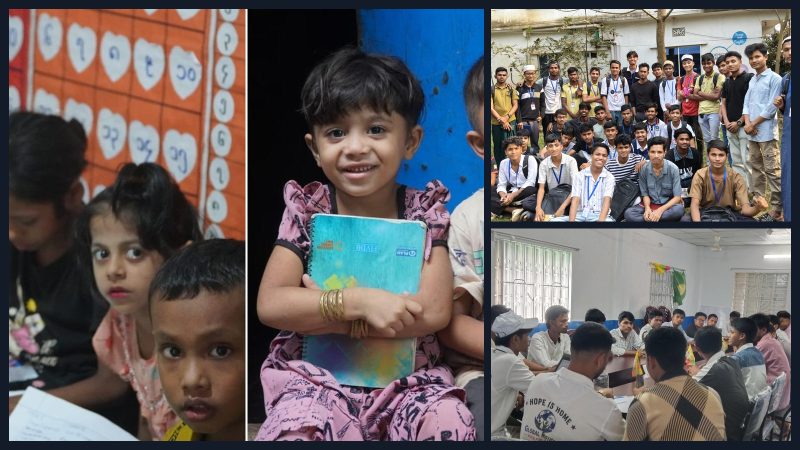
Education is more than a basic right; it is the foundation of opportunity, dignity and a better future. Every child deserves access to quality education. Yet for Rohingya children and young people living in refugee camps in Bangladesh, that right remains far from reality.
Although many children attend learning centres, opportunities become increasingly limited as they grow older. A lack of educational programmes, qualified teachers, learning materials and proper classroom facilities prevents many students from continuing their studies. As a Rohingya student, I have experienced these challenges firsthand. I know how difficult it is to pursue an education when opportunities are scarce.
Many Rohingya students dream of becoming doctors, teachers, engineers and other professionals. But dreams alone cannot build a future. They need quality education, meaningful support and equal opportunities to turn those ambitions into reality. Without them, an entire generation risks losing its future.
Displacement and Interrupted Education
In August 2017, thousands of Rohingya families were forced to flee their homes in Myanmar because of violence and conflict. Many crossed into Bangladesh in search of safety. Among them were countless children whose education was abruptly interrupted by displacement.
Upon arrival, families faced urgent needs, including food, shelter, security and healthcare. Many also needed assistance accessing humanitarian services and communicating with aid organisations and UN agencies.
Humanitarian organisations subsequently established learning centres to provide education for Rohingya children. These centres have helped many children resume their studies and receive primary-level education. However, opportunities remain limited. Some students lack basic learning materials, while others struggle to find suitable places to study in their shelters.
The challenges become even greater after primary education. Many students have no clear pathway to continue their studies.
The Barriers to Higher Education
One of the greatest challenges facing Rohingya students is access to secondary and higher education. Younger children may find places in learning centres, but older students often have far fewer options.
Even after completing available courses, many cannot progress further. This leaves them uncertain about their future. Will they be able to complete higher secondary education? Can they attend college or university? Will their educational certificates be recognised by other institutions?
These are not simply questions about academic qualifications. They reflect the uncertainty facing an entire generation of Rohingya young people.
Being a refugee should never mean losing the right to learn. Rohingya students deserve the same opportunities to pursue education and prepare for their futures as other young people around the world.
Some institutions have created pathways for higher education. BRAC University, the Open Society University Network (OSUN), Bard College and the Asian University for Women (AUW) have provided opportunities for some Rohingya students. Some female students have enrolled at AUW, while some male students have accessed online learning and further education through other institutions.
These initiatives offer hope, but they reach only a small number of students. Thousands who wish to pursue higher education still cannot access such opportunities.
A Student’s Journey: Education Against the Odds
SA Saddam Hussein is among the Rohingya students whose education has been deeply affected by displacement. In a personal interview with the author in 2026, he described how his educational journey was disrupted when his family was forced to flee Myanmar in 2017.
He had begun his education in Myanmar but had to leave it behind when his family escaped to Bangladesh. After arriving in the refugee camps, he searched for ways to continue learning and adapt to his new circumstances.
Since 2017, he has studied at RA-Learning Centre (RA-LC) and completed Grade 10. His experience has taught him that education requires patience, hard work and support. It has also helped him understand the struggles of other students who want to continue studying but cannot find sufficient opportunities.
Today, he cannot pursue further education or earn an income because opportunities in the camps are so limited.
He believes Rohingya students have the ability and determination to achieve great things, but the lack of opportunities continues to hold them back.
His experience reflects a much wider problem: talent and ambition are not enough when young people are denied the chance to develop their potential.
Digital Learning: An Opportunity, but Not a Complete Solution
In today’s world, education is no longer limited to schools and learning centres. Online courses, educational websites and digital platforms have opened new ways for young people to learn.
These resources can help Rohingya students improve their English, develop computer skills and explore a wide range of subjects. I also use online learning opportunities to strengthen my knowledge and skills. They have helped me become more confident, connect with people globally and explore subjects beyond my regular studies.
However, digital education is not equally accessible to everyone. Some students do not have smartphones or computers, while others struggle with unreliable internet connections and electricity shortages.
Online learning can complement classroom education, but it cannot replace proper educational facilities. Rohingya students need both quality classroom instruction and access to digital learning resources.
Teachers and Funding: Essential to Quality Education
Teachers play a vital role in every student’s educational journey. They explain lessons, answer questions and help students develop their knowledge and abilities.
Despite difficult circumstances, Rohingya teachers and community educators continue to support students. Their dedication deserves recognition. However, they also need proper training, teaching materials and institutional support to improve the quality of education in the camps.
Expanding the number of learning centres alone is not enough. What matters is ensuring that students receive meaningful, quality education.
Another serious concern is the shortage of funding for educational programmes. Learning centres need reliable financial support to remain operational, pay teachers and provide books and essential learning materials.
In June 2025, UNICEF warned that approximately 230,000 Rohingya refugee children were at risk of losing access to education because of funding shortages.
This warning highlights the consequences of declining financial support. When children lose access to education, their learning is disrupted and their future opportunities become even more limited.
Education must not be treated as less important than other basic needs. Children need food and shelter, but they also need the opportunity to learn, develop their abilities and prepare for the future.
What Needs to Change?
Improving education for Rohingya students requires long-term commitment and practical solutions.
First, learning centres need stable funding to prevent repeated interruptions to children’s education.
Second, older students need more opportunities to continue their studies. Clear educational pathways should connect basic education with secondary school, higher education, college, university and vocational training.
Third, teachers need professional training, books and adequate teaching materials to deliver quality education.
Fourth, students should have greater access to digital learning resources, including reliable internet connections and appropriate devices.
Most importantly, Rohingya students must be included in decisions about their education. They understand the challenges they face and can offer valuable ideas for improving the system. Their voices should be heard when educational policies and programmes affecting their future are discussed.
Education initiatives should not simply be designed for Rohingya students; they should also involve Rohingya students in shaping those initiatives.
Every Dream Deserves a Chance
Despite these challenges, many Rohingya students continue to study and work towards their dreams. Some aspire to become doctors, teachers, engineers, researchers, journalists, photographers and community leaders. They want to gain knowledge, develop their skills, support their families and contribute to their communities.
I believe education can help us build a better future. It gives us the knowledge to understand our rights, the confidence to speak about our challenges and the ability to work towards positive change in our communities.
Rohingya children and young people have already lost countless opportunities because of displacement. They should not be forced to lose their right to quality education as well.
We are not asking for special treatment. We are asking for the opportunity to learn, continue our education and build our own future.
Every Rohingya child has a dream. Every dream deserves an opportunity to grow, and education is the key to making that possible.
About the Author
Mohammed Sohaib
Rohingya Youth Advocate & Student | Interpreter | Journalist | Genocide Survivor | AI, Technology & Digital Learning | Truth > Silence | Future Changemaker
Truth over silence. Justice through voices. Hope through action.