

Water Insecurity in Rohingya Refugee Camps: The Daily Struggle for Safe Drinking Water, Hygiene and Dignity in Cox’s Bazar, Bangladesh
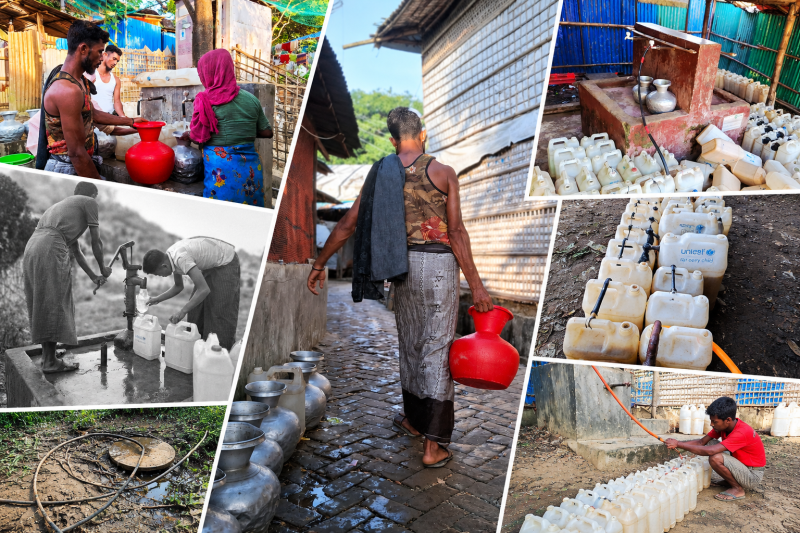
Water Insecurity in Rohingya Refugee Camps: The Daily Struggle for Safe Drinking Water, Hygiene and Dignity in Cox’s Bazar, Bangladesh
Field Research Team: Ro Aros Kamal, Azim Ullah (TG Ãzîm), Hubabib Chowdhury and Fayazul Graphy
Written and Editorially Reorganised by: Ro Maung Shwe
Field Research | Public Health | Humanitarian Affairs | Rohingya Refugee Crisis
Abstract
Access to safe and sufficient drinking water remains a critical humanitarian challenge for Rohingya refugees living in the densely populated settlements of Cox’s Bazar, Bangladesh. Since fleeing persecution and violence in Myanmar, approximately one million Rohingya refugees have sought protection in Bangladesh, where many continue to face inadequate access to essential services, including safe drinking water, sanitation and hygiene facilities.
This exploratory study examines everyday water insecurity and related public-health concerns among Rohingya refugees in the Teknaf area of Cox’s Bazar. It focuses on Unchiprang (Camp 22), Leda (Camp 24), Alikhali (Camp 25), Nayapara (Camp 26), Jadimura (Camp 27) and the Nayapara Registered Refugee Camp. The research explores the availability, accessibility and perceived quality of drinking and domestic water, alongside household storage practices, sanitation conditions and the physical challenges associated with water collection.
Employing a mixed-methods, field-based approach, the study draws on direct observations, household-level information, face-to-face interviews, focus group discussions, community testimonies, photographic documentation and mapping of water-distribution infrastructure. Particular attention is given to the potential risks of contamination throughout the water-supply chain, including collection, transportation and household storage. Residents’ experiences are also examined to understand how water shortages, concerns about treatment-related odours and limited access to convenient water points influence household decisions and everyday living conditions.
The findings indicate substantial differences in water accessibility across the study locations. Unchiprang (Camp 22), in particular, presents significant challenges associated with its hilly terrain, the distance between shelters and water points, limited distribution schedules and the physical burden of water collection. Residents across the study locations also describe difficulties securing sufficient water for drinking, cooking, bathing and other essential domestic activities. Some express reluctance to consume water supplied through communal systems because of its strong medicinal or chlorine-like smell, leading certain households to seek alternative sources, including tube wells and nearby surface water.
The study highlights the importance of assessing water quantity, infrastructure accessibility, water quality, household storage, sanitation and community confidence as interconnected dimensions of water security. It recommends systematic water-quality testing, improvements in distribution infrastructure, equitable household access, stronger community participation and better coordination among humanitarian service providers.
By bringing together community experiences, field observations and infrastructure documentation, this research seeks to contribute to evidence-based discussions on water, sanitation and hygiene (WASH) services in refugee settlements. It also emphasises that access to safe water is not merely a matter of infrastructure or service delivery, but a fundamental condition for public health, human dignity and everyday well-being.
Keywords: Rohingya refugees; water insecurity; drinking-water access; water quality; water scarcity; WASH; sanitation; public health; groundwater; humanitarian response; Cox’s Bazar; Bangladesh.
1. Introduction: When Access to Water Becomes a Daily Struggle
For millions of people around the world, access to clean water is an ordinary part of everyday life. For many Rohingya refugees living in the camps of Cox’s Bazar, however, obtaining enough water for drinking, cooking, bathing and maintaining basic hygiene remains a daily struggle.
Following decades of persecution and systematic discrimination in Myanmar, the mass displacement of Rohingya people in 2017 resulted in one of the world’s largest refugee situations. Bangladesh provided refuge to hundreds of thousands of people fleeing violence, bringing the refugee population in Cox’s Bazar to approximately one million.
Today, the refugees live in densely populated settlements characterised by temporary shelters, limited space, challenging geographical conditions and substantial dependence on humanitarian assistance. Although humanitarian organisations have established water-distribution networks, storage facilities, sanitation infrastructure and hygiene-promotion programmes, access to sufficient and acceptable-quality water remains uneven across different locations and households.
Water is essential not only for drinking but also for cooking, bathing, cleaning, washing clothes and maintaining personal hygiene. In the hot, dusty and overcrowded environment of the refugee settlements, insufficient water can have consequences extending beyond physical discomfort. It can affect health, education, household responsibilities, personal dignity and the overall quality of life.
The geographical characteristics of several settlements further complicate access. In areas such as Unchiprang, many shelters are situated on hillsides or elevated terrain, requiring residents to walk considerable distances and navigate steep pathways to reach communal water points. For older people, persons with disabilities, individuals with chronic health conditions and families with young children, these journeys can become particularly difficult.
The reliability and acceptability of distributed water also influence household practices. Some residents express concerns about the strong medicinal smell of treated water and prefer alternative sources that they perceive as more suitable for consumption. Others report relying on nearby tube wells, ponds or streams when communal supplies are insufficient or unacceptable to them.
Such practices raise important questions about water quality, household water management and the factors influencing community confidence in humanitarian water services.
This study therefore examines water insecurity through both its physical and social dimensions. Rather than focusing exclusively on the availability of water infrastructure, it explores whether households can obtain sufficient water, whether distribution points are accessible, how water is stored and used, and what concerns residents experience regarding its quality and safety.
By documenting community experiences across selected refugee settlements in Teknaf, this research seeks to identify gaps in existing water-service arrangements and contribute to practical recommendations for improving water security, sanitation and public-health protection.
2. Research Objectives
The study has five principal objectives:
To examine the availability, accessibility and perceived quality of drinking and domestic water in selected Rohingya refugee settlements in Teknaf.
To document the everyday challenges associated with water collection, transportation, household storage and limited distribution schedules.
To investigate residents’ concerns regarding water-treatment practices, possible contamination pathways and the acceptability of supplied water.
To explore reported health and hygiene challenges associated with inadequate water availability, poor sanitation and household water-management conditions.
To develop practical recommendations for humanitarian agencies, service providers, camp authorities and other relevant stakeholders to strengthen equitable and sustainable water and sanitation services.
3. Research Methodology
3.1 Study Design and Locations
This exploratory study employed a mixed-methods, field-based approach combining qualitative information, descriptive household data, direct observations and photographic documentation.
Field research covered selected Rohingya refugee settlements in the Teknaf area of Cox’s Bazar, including:
Unchiprang (Camp 22)
Leda (Camp 24)
Alikhali (Camp 25)
Nayapara (Camp 26)
Jadimura (Camp 27)
Nayapara Registered Refugee Camp
The research examined differences in water access, distribution infrastructure, household water-management practices, sanitation conditions and residents’ experiences across the selected locations.
3.2 Primary Data Collection
Primary information was collected through several complementary methods:
Direct field observations of water-distribution infrastructure, collection points and surrounding environmental conditions.
Face-to-face interviews with refugee residents and community members.
Focus group discussions (FGDs) and informal community consultations.
Household-level information concerning water consumption, storage and accessibility.
Discussions with local volunteers and individuals familiar with water-service delivery.
Photographic documentation of water infrastructure, household storage facilities and water-collection practices.
Mapping and documentation of selected water-distribution facilities in Unchiprang (Camp 22).
Particular attention was given to the distance between shelters and communal water points, waiting times, distribution schedules, household size, the availability of storage containers and the difficulties experienced by residents with physical or health-related limitations.
3.3 Water Quality and Contamination Concerns
The study also examined residents’ perceptions of water quality and potential contamination risks at different stages of the water-supply process.
Observations considered the relationship between water-intake facilities, distribution pipelines, drainage channels and surrounding environmental conditions. Household accounts were used to understand concerns about water colour, smell, taste and acceptability.
These observations provide an initial basis for identifying possible environmental and infrastructural risks. However, visual inspection and residents’ perceptions alone cannot establish the presence of bacterial, chemical or other contaminants. Laboratory-based testing is necessary to determine actual water quality and identify specific contaminants.
Similarly, although the research explores possible changes in water quality between collection points and household storage, any definitive comparison requires documented sampling procedures and laboratory results.
3.4 Ethical and Research Considerations
The research incorporates residents’ experiences and personal testimonies to highlight the human consequences of water insecurity. Personal accounts are presented to reflect the perspectives of the individuals interviewed and should not automatically be interpreted as representative of every household in the camps.
Given the protection concerns affecting refugee communities, the identities and personal information of interviewees should be handled responsibly. Children’s accounts and other potentially sensitive testimonies should be published only with appropriate consent and safeguards.
4. Findings and Field Observations
4.1 Water Distribution Infrastructure: The Situation in Unchiprang Camp 22
Unchiprang (Camp 22) provides an important example of the infrastructure and geographical challenges affecting water access in the Rohingya refugee settlements.
Field observations and infrastructure mapping identified a distribution network comprising storage tanks, interconnected pipelines and communal tap stands serving different blocks of the settlement.
According to the infrastructure information documented during the research, the network includes:
Water-distribution infrastructure in Camp 22
Large storage tank: approximately 95,000 litres.
Additional storage tank: approximately 5,000 litres.
Total communal tap stands: 107.
Tap stands serving the Rohingya community: 103.
Tap stands serving the host community: 4.
Distribution across the Rohingya settlement:
A Block: 22 tap stands.
B Block: 31 tap stands.
C Block: 27 tap stands.
D Block: 27 tap stands.
The distribution network illustrates the scale of infrastructure established to provide water to residents. However, the existence of storage tanks and communal tap stands does not necessarily mean that every household receives sufficient water or has convenient access to distribution points.
According to the field information, the larger storage tanks collect water from a nearby river source before treatment and distribution. Chlorine-based disinfectants, including sodium hypochlorite, are reportedly used in the treatment process. The water-supply arrangements have been associated with the involvement of humanitarian organisations and service providers, including DSK, Oxfam and UNICEF.
Although treatment is essential for reducing microbiological risks, residents’ concerns about strong chemical or medicinal smells highlight the importance of transparent communication, appropriate treatment controls and regular water-quality monitoring.
Photographic documentation: Water collection and supply infrastructure in Unchiprang Camp 22
The photograph documents a water-collection and supply area reportedly developed through DSK-supported infrastructure. Flexible hoses and pipelines convey water towards the camp’s distribution network. The collection structure is situated close to a visibly dark and turbid drainage channel. The proximity of these environmental features raises questions about potential contamination pathways and the need for technical assessment of the water-intake and supply infrastructure.
Photograph: © Ro Aros Kamal
A resident of Unchiprang, Ro Aros Kamal, described his concerns:
“The water is connected to the drainage and dark water that has already been used and washed by our people. After using the water, we receive the same water again the next day and have to use it for cooking, cleaning, and drinking.”
His account reflects concerns about the relationship between the water-supply infrastructure and nearby drainage. Independent technical inspection and laboratory testing would be necessary to establish whether any contamination occurs and, if so, at which stage of the supply process.
4.2 Mapping Water Accessibility: Distribution Across Camp 22
Mapping the distribution network provides another perspective on the geographical organisation of water services in Unchiprang.
The map prepared during the research identifies storage tanks, pipeline connections and communal tap stands distributed across different blocks. It also illustrates the relationship between water-distribution facilities and the surrounding settlement layout.
The documented 107 tap stands demonstrate the presence of an established distribution network. Nevertheless, the number of facilities alone cannot establish whether water services adequately meet the needs of the population.
Assessing service adequacy requires information about the number of functioning tap stands, water volume, daily supply duration, household coverage, population density and the distance residents must travel to collect water.
Map: Water Distribution Network, Unchiprang Camp 22, Teknaf, Cox’s Bazar.
Mapping and documentation: © Hubabib Chowdhury
4.3 Limited Water Allocations and Long Waiting Times
One of the recurring concerns raised by residents is the limited duration of daily water distribution.
According to community accounts, some sub-blocks have only one or two communal water stands, with water reportedly available for approximately two hours a day. During these limited distribution periods, residents may have to wait in queues for extended periods to collect water.
Household size further increases the pressure. Families consisting of four to ten members must manage their daily requirements using the quantities they can collect during the available supply window.
Some residents describe collecting approximately five or six containers of water for their household, depending on family size. However, the actual volume of these containers and the total quantity collected per household require further measurement.
For families with limited storage capacity, the challenge becomes even greater. Water collected during a short distribution period must be managed carefully to cover drinking, cooking, bathing, cleaning and other domestic activities until the next supply.
The consequences are particularly severe during periods of high temperatures, when water requirements increase and maintaining personal hygiene becomes more difficult.
Residents’ experiences suggest that water insecurity is not simply a question of whether a distribution point exists. It also concerns the quantity supplied, the frequency of distribution, the time required for collection and whether households can meet their basic daily needs.
4.4 The Physical Burden of Collecting Water in Hilly Settlements
The geographical characteristics of Unchiprang create additional barriers for residents living on elevated terrain.
Many shelters are situated on hillsides or at higher elevations, with some reportedly located approximately 40–60 feet above surrounding ground level. Residents living in these areas may have to descend steep pathways to reach communal water points and carry heavy containers back to their shelters.
For individuals experiencing illness, physical weakness, mobility limitations or chronic health conditions, this routine can become especially demanding.
One resident, Ahzahar Hossain, described his experience:
“If there were water facilities, such as a hand pump, tube well, or another accessible water source near the hill, I would not have to suffer like this today.”
He further explained:
“My shelter is on top of a hill, and there is no tube well nearby. Despite feeling weak and experiencing pain because of my health condition, I have to walk to the water-distribution point to collect water for our daily needs. It is very difficult. Among all the basic necessities of daily life, water is the most important. People may survive with less food, but they cannot survive without water.”
His testimony illustrates how the geographical placement of water points can create unequal access, particularly for residents who cannot easily travel long distances or carry heavy containers.
It also highlights the importance of considering settlement topography and the needs of vulnerable households when designing water-distribution infrastructure.
4.5 When Bathing Becomes a Luxury
Water shortages also affect personal hygiene, education and the everyday experiences of young people.
Momtazul Hoque, a 20-year-old Rohingya student at BHAWA AALAINN (B.E.H.S.) community school in Camp 22, described the difficulties he experiences when water is unavailable at his shelter.
“I needed to have a shower, but there was no water in my shelter. I packed some clothes and walked for 40 minutes to take a bath because it was not the time for water supply.”
His experience illustrates how limited water availability can force residents to travel beyond their immediate surroundings to meet basic hygiene needs.
For students and young people, these difficulties may affect their ability to attend school feeling clean and comfortable. The time spent searching for water or bathing elsewhere can also interfere with education, household responsibilities and other daily activities.
The situation demonstrates that the effects of water insecurity extend beyond household consumption and directly influence social participation, dignity and personal well-being.
4.6 Residents’ Concerns About Water Treatment and Acceptability
Although water-treatment systems are designed to improve drinking-water safety, some residents express discomfort about the smell of treated water.
In Unchiprang, Fayazul described the difficulties associated with the quantity and perceived quality of distributed water:
“Ten litres is not enough, and the strong chemical smell makes us worry about our health.”
Residents also expressed concerns about the suitability of water for drinking and other domestic purposes. Some described receiving water that they perceived as insufficiently filtered, while others associated their experiences of skin irritation and illness with the water they used.
An Oxfam volunteer shared broader concerns about the health and hygiene conditions within the community:
“Many people here are suffering from illnesses we did not see before. In Myanmar, we were healthy even though we had limited access to hospitals. Here, there are hospitals and health-awareness programmes, yet people continue to suffer. We believe unhygienic water, poor sanitation, and limited opportunities to bathe and stay clean are contributing to these illnesses.”
These accounts highlight the importance of addressing both the technical quality of water and public confidence in its safety.
The presence of a medicinal smell does not, by itself, establish that water contains excessive chemicals or is unsafe to drink. Equally, the absence of an unusual smell cannot guarantee that water is safe. Regular testing for residual chlorine, microbiological contamination and relevant chemical parameters is therefore essential.
Clear communication about water-treatment procedures, testing results and appropriate household water practices may also help strengthen residents’ confidence in supplied water.
4.7 Household Water Management: Storage, Containers and Everyday Adaptation
Water storage has become an essential component of household survival strategies across the refugee settlements.
Because communal water supplies are not always continuously available, families attempt to collect and store sufficient quantities during scheduled distribution periods. Containers, buckets, jerry cans, plastic pots, mugs and household storage tanks are used to transport and preserve water for subsequent consumption.
These materials serve important functions within the household water-management system. They allow residents to maintain a limited reserve and reduce the need to return repeatedly to communal distribution points.
However, the availability and condition of storage containers vary between households. Some families have to purchase their own containers, while others face difficulties replacing damaged or unsuitable equipment.
Mohammad Sowlaim, 54, a resident of Leda (Camp 24), described his experience:
“I bought these eight plastic containers about a month ago for our daily household use. I clean them regularly, but the marks on the containers do not disappear; instead, they continue to become more visible. Meanwhile, we haven’t received plastic water containers or any water-carrying tools from the camp-level NGOs for the past two years.”
His account highlights the financial and practical responsibilities that households must manage to maintain their daily water supply.
The condition, cleanliness and suitability of storage containers are important considerations because unsafe handling and inadequate storage can create opportunities for contamination after water has been collected.
Humanitarian WASH programmes should therefore consider household storage capacity and the availability of appropriate water-carrying equipment as integral components of water security.
4.8 Household Water Preferences and the Search for Alternative Sources
Residents’ decisions about which water sources to use are influenced by availability, accessibility, taste, smell, familiarity and perceptions of safety.
Azim Ullah (TG Ãzîm) described the importance of household storage and the preference for alternative sources:
“In my family, these containers and stands are very important for storing water. They allow us to keep water safely inside our shelter and make it easier to access whenever we need it. But we do not usually drink the water supplied by NGOs in the camp. It has a strong medicinal smell, which makes us uncomfortable and reluctant to use it. Because of this, we prefer to collect water from tube wells, which we feel more comfortable using. For us, storing water is not only about having enough water—it is also about having water that we trust and feel safe using.”
This testimony demonstrates that the availability of a water source does not automatically guarantee its acceptance or use.
Some households may prefer tube-well water because they consider it more familiar or acceptable. Others may rely on ponds or nearby streams when communal supplies are inadequate.
However, alternative sources should not automatically be assumed to be safer. Their suitability depends on groundwater conditions, environmental exposure, sanitary protection and water-quality testing.
The findings therefore underline the importance of combining reliable water infrastructure with transparent quality monitoring and meaningful community engagement.
4.9 Water Insecurity and Reported Health Concerns
The relationship between water availability, sanitation and public health is a central concern emerging from the field research.
Residents described difficulties obtaining enough water for drinking, bathing, washing clothes and cleaning their shelters. They also raised concerns about diarrhoeal illnesses, skin conditions, headaches, fatigue, excessive thirst and other health-related problems.
In overcrowded settlements exposed to high temperatures and environmental dust, insufficient water can make it harder for households to maintain adequate hydration and hygiene.
Limited access to bathing facilities and difficulties maintaining clean living environments may further increase vulnerability to certain skin conditions and sanitation-related health risks.
The research also identifies residents’ concerns about possible kidney-related health conditions and other serious illnesses. However, these accounts require careful clinical and epidemiological assessment before any association with specific water sources or treatment practices can be established.
Existing public-health reporting has documented a substantial burden of communicable diseases and skin conditions among Rohingya refugees. The World Health Organization and other health-sector partners have consistently identified overcrowding, inadequate sanitation and infectious diseases as important public-health concerns in the camps.
The broader implication is that water insecurity must be addressed as part of an integrated public-health response. Adequate water supply, sanitation infrastructure, hygiene facilities, health education and disease surveillance are closely interconnected.
4.10 Children’s Dignity and the Impact on Education
The effects of water shortages are particularly concerning for children, whose hygiene, health, education and social well-being depend on access to adequate water.
One Rohingya refugee child, Anas, described the emotional and physical difficulties associated with inadequate bathing facilities:
“Without access to water, even taking a bath has become a luxury. When I go to school without bathing, my classmates complain about the smell. At night, the heat makes my body itch so badly that I cannot sleep. I want to go to school feeling clean and comfortable, just like other children, but the lack of water makes even that difficult.”
His testimony highlights a dimension of water insecurity that is often overlooked in infrastructure-focused discussions: the effect on children’s dignity, confidence and participation in education.
Access to sufficient water is essential not only for preventing disease but also for ensuring that children can attend school, maintain personal hygiene and participate in community life without unnecessary embarrassment or discomfort.
Water and sanitation interventions should therefore prioritise child-sensitive and accessible facilities, including appropriate bathing and hygiene arrangements.
4.11 Community Solidarity: Providing Water Beyond Household Needs
Despite the challenges associated with limited water access, community members have also developed informal practices to support others.
Mahasan, a resident involved in providing drinking water to people travelling through the settlement, explained:
“I started providing water through stands in 2019. I keep water containers for people who travel, play and feel thirsty while going and coming. I believe helping people who need water along the way is important. When there is nowhere else to get water, providing it can help them.”
His initiative illustrates how community members contribute to addressing everyday water needs beyond their own households.
Such practices demonstrate the importance of community participation and local solidarity in humanitarian settings. They also highlight opportunities for humanitarian agencies to recognise and support community-led initiatives that complement formal water-distribution systems.
5. Population Overview and Field Data
The following figures were provided through the research team’s field-level population information and are presented as reported figures for the selected study locations.
| Study location | Reported families | Reported population |
|---|---|---|
| Unchiprang (Camp 22) | 5,007 | 25,526 |
| Leda (Camp 24) | 7,871 | 37,169 |
| Alikhali (Camp 25) | 2,705 | 13,133 |
| Nayapara (Camp 26) | 11,738 | 59,297 |
| Jadimura (Camp 27) | 6,453 | 30,089 |
| Nayapara Registered Camp | 5,735 | 25,928 |
| Total | 39,509 | 191,142 |
Source: Population information compiled by the research team. Figures should be cross-checked against the latest official population records before publication.
The population information illustrates the substantial number of people living within the selected study locations and the importance of planning water services according to settlement size and household needs.
The research team’s field observations also suggest that households use a combination of communal tap stands, tube wells and other locally available sources. Some residents reported preferring alternative sources because of concerns about the smell or acceptability of treated water.
However, the reported proportions of households using different water sources require a clearly defined survey denominator and documented sampling method before they can be interpreted as representative findings.
6. Discussion: Water Security Beyond Infrastructure
The findings indicate that water insecurity in Rohingya refugee settlements is a multidimensional issue involving availability, accessibility, acceptability, household management, sanitation and public health.
The existence of water-distribution infrastructure represents an important humanitarian investment. Nevertheless, infrastructure coverage alone cannot demonstrate whether residents receive sufficient quantities of water or whether services are accessible to all households.
The situation in Unchiprang illustrates how settlement topography can influence access. Even where communal water points are available, residents living on elevated terrain may face substantial physical difficulties transporting water to their shelters.
Similarly, limited distribution hours can create long queues and force households to store water for extended periods. Where families lack sufficient storage containers or appropriate carrying equipment, these challenges become more severe.
Residents’ concerns about the smell and perceived quality of treated water introduce another important dimension. Water services must not only meet technical safety requirements but also maintain community confidence through transparent communication and consistent monitoring.
The preference for alternative sources further demonstrates the importance of understanding household decisions. Water collected from tube wells, ponds and streams may provide an immediate response to shortages, but these sources require appropriate assessment to determine whether they are safe for consumption.
The health implications of water insecurity must also be considered within the broader environmental and public-health context. Inadequate water, poor sanitation, overcrowding and limited hygiene facilities may interact to increase vulnerability to infectious diseases and other health problems.
Importantly, residents’ testimonies provide valuable evidence of lived experience, but clinical diagnoses and causal relationships require independent medical and scientific verification.
Taken together, the findings suggest that effective water-security interventions should combine infrastructure improvements, technical water-quality assessments, equitable distribution arrangements, household support, public-health monitoring and meaningful community participation.
7. Recommendations
Based on the field observations, household accounts, community discussions and infrastructure documentation, the research identifies eight priority areas for action.
7.1 Improve the Adequacy and Reliability of Water Supply
Humanitarian agencies and relevant service providers should assess whether existing water allocations are sufficient to meet essential household needs, including drinking, cooking, bathing, cleaning and sanitation.
Distribution schedules, daily water volumes, service interruptions and household coverage should be systematically monitored.
Particular attention should be given to larger households, older people, persons with disabilities, individuals with health-related limitations and families with young children.
Water-supply planning should follow applicable humanitarian standards and public-health recommendations while accounting for population size, household composition, seasonal conditions and local water availability.
7.2 Strengthen Water-Quality Monitoring and Prevent Contamination
Regular water-quality assessments should be conducted at source points, treatment facilities, storage tanks, distribution outlets and household storage locations.
Monitoring should include relevant microbiological and chemical parameters, residual chlorine levels and other indicators required by applicable drinking-water standards.
Water-intake infrastructure, pipelines and drainage channels should be technically inspected to identify potential contamination pathways.
Where risks are identified, corrective measures should include protecting water sources, improving drainage, repairing damaged pipelines, maintaining storage facilities and relocating vulnerable infrastructure where technically necessary.
Residents should also receive clear information about water-treatment processes, monitoring results and the meaning of residual chlorine levels.
7.3 Reduce Geographical Inequalities in Water Accessibility
Water-distribution infrastructure should be planned according to population density, settlement layout, geographical conditions and household distance from communal collection points.
In Unchiprang, particular attention should be given to residents living on hillsides and in locations where access to existing water points requires considerable physical effort.
Additional tap stands, improved pipeline coverage, strategically positioned storage facilities and accessible water points should be considered where technical assessments identify gaps.
The feasibility of groundwater development, including shallow tube wells, should be evaluated through hydrogeological investigations, environmental assessments and water-quality testing.
7.4 Strengthen Household Water Storage and Access to Equipment
Humanitarian WASH programmes should assess whether households have adequate and appropriate containers for collecting, transporting and safely storing water.
Where shortages are identified, support may include distributing suitable water containers, jerry cans, covered storage vessels and other essential water-carrying equipment.
Hygiene-promotion programmes should provide practical guidance on cleaning containers, safe water handling, preventing recontamination and maintaining appropriate household storage conditions.
7.5 Establish Community-Based Monitoring and Accountability Mechanisms
Rohingya residents should be meaningfully involved in monitoring water services and identifying problems affecting their communities.
Accessible feedback and complaint mechanisms should allow residents to report shortages, suspected contamination, damaged infrastructure, irregular distribution and other service-related concerns.
Women, young people, older residents, persons with disabilities and other groups facing particular barriers should be represented in consultations and decision-making processes.
Service providers should communicate how complaints are addressed and provide accessible information about distribution schedules, water-treatment practices and quality-monitoring results.
7.6 Strengthen Surveillance of Water-Related Health Risks
Health facilities and WASH service providers should strengthen coordination to monitor illnesses potentially associated with inadequate water, poor sanitation and insufficient hygiene facilities.
Reported diarrhoeal illness, skin conditions, suspected infections and dehydration-related symptoms should be assessed by qualified health professionals.
Where appropriate, epidemiological investigations and laboratory testing should be used to examine potential relationships between water exposure and health outcomes.
Health information should be handled confidentially, and public-health interventions should prioritise prevention, timely treatment and accessible hygiene services.
7.7 Improve Institutional Coordination and Infrastructure Maintenance
Relevant government authorities, camp management, United Nations agencies, humanitarian organisations and implementing partners should strengthen coordination around water treatment, distribution, infrastructure maintenance and emergency response.
Responsibilities should be clearly defined to avoid service gaps and duplication.
Regular technical inspections should assess the operational condition of storage tanks, pipelines, communal tap stands and water-treatment facilities.
Maintenance arrangements should account for population changes, environmental conditions, seasonal variation and the reliability of existing water sources.
7.8 Promote Further Research and a Human Rights-Based Approach
Further research is necessary to develop a more comprehensive understanding of water insecurity across Rohingya refugee settlements.
Future studies should combine structured household surveys, interviews, direct observation, geographical mapping and laboratory-based water-quality assessments.
Water samples should be collected at source points, treatment facilities, distribution outlets and household storage locations to identify possible changes in water quality throughout the supply chain.
Research should also examine household water consumption, collection times, distance to water points, distribution schedules, sanitation facilities and reported health concerns.
Water-security programmes should recognise that access to sufficient and safe water is fundamental to health, dignity and human well-being.
Interventions must be equitable, culturally appropriate, accessible and responsive to community priorities. Rohingya refugees should participate meaningfully in the design, implementation and evaluation of programmes intended to serve them.
8. Conclusion: Safe Water Is a Matter of Health and Human Dignity
For Rohingya refugees living in the camps of Cox’s Bazar, water insecurity is not simply an infrastructure problem. It is an everyday humanitarian challenge that influences health, hygiene, education, household responsibilities and human dignity.
The experiences documented across the selected settlements demonstrate that the presence of water tanks, pipelines and communal tap stands does not necessarily guarantee sufficient, convenient or acceptable access for every household.
Residents continue to describe long waiting times, limited distribution schedules, difficult journeys to water points, inadequate household storage and concerns about the quality and acceptability of supplied water. These challenges are particularly pronounced among households living on elevated terrain and those with older members, young children, disabilities or health-related limitations.
The findings also demonstrate the importance of listening to the communities that depend on humanitarian water systems. Residents’ experiences provide valuable insight into the practical challenges that may not be fully reflected in infrastructure coverage figures or programme-level assessments.
However, concerns about possible contamination and water-related illness must be investigated through independent technical assessments, laboratory testing and appropriate public-health surveillance.
A sustainable response requires more than expanding infrastructure. It demands reliable water supplies, transparent treatment practices, effective sanitation, accessible distribution points, adequate household storage, regular quality monitoring and meaningful community participation.
Humanitarian organisations, relevant authorities and service providers should work together to ensure that water interventions respond to actual household needs and address inequalities in access.
Ultimately, every refugee household should be able to obtain sufficient and safe water without enduring unnecessary physical hardship, excessive waiting or avoidable health risks.
Water is not a privilege to be rationed beyond necessity. It is essential to life, health and human dignity. Ensuring equitable access to safe water must remain a fundamental priority in the humanitarian response to the Rohingya refugee crisis.
References
World Health Organization. (2022). Guidelines for Drinking-water Quality: Fourth Edition Incorporating the First and Second Addenda. Geneva: WHO.
https://www.who.int/publications/i/item/9789240045064
Sphere Association. (2018). The Sphere Handbook: Humanitarian Charter and Minimum Standards in Humanitarian Response. Geneva: Sphere Association.
https://spherestandards.org/handbook/
United Nations High Commissioner for Refugees (UNHCR). (2022). WASH Knowledge, Attitudes and Practices Survey 2022: Bangladesh.
https://datacatalog.ihsn.org/catalog/11985
UNICEF Bangladesh. (2023). Bangladesh Humanitarian Situation Report: End-Year, 1 January–31 December 2023.
https://www.unicef.org/media/151381/file/Bangladesh-Humanitarian-SitRep-%28End-Year%29%2C-1-January-to-31-December-2023.pdf
World Health Organization. (2022). World Report on the Health of Refugees and Migrants. Geneva: WHO.
https://www.who.int/publications/i/item/9789240054462
Assessment of water, sanitation and hygiene services within nineteen Rohingya camps in Cox’s Bazar, Bangladesh in 2022. (2025). BMC Public Health.
https://pmc.ncbi.nlm.nih.gov/articles/PMC12147237/
United Nations High Commissioner for Refugees (UNHCR). (n.d.). WASH: Water, Sanitation and Hygiene.
https://www.unhcr.org/handbooks/wash/
World Health Organization. (2022). Cox’s Bazar Monthly Situation Report: Rohingya Crisis. WHO Bangladesh.
https://cdn.who.int/media/docs/default-source/searo/bangladesh/bangladesh—rohingya-crisis—pdf-reports/sitreps/2022/who-cox-s-bazar-monthly-situation-report-1.pdf
About the Authors
Written and Editorially Reorganised by: Ro Maung Shwe, is a Writer, Journalist, Human Rights Defender, Rohingya Youth Advocate, Humanitarian Professional and Political Analyst
Ro Aros Kamal, Azim Ullah (TG Ãzîm), Hubabib Chowdhury and Fayazul Graphy are emerging Rohingya researchers, community advocates, educators, photographers and youth contributors committed to documenting humanitarian and social challenges affecting displaced communities.
Their work focuses on community-based documentation, public-health awareness, environmental concerns, water and sanitation challenges, and the everyday experiences of Rohingya refugees. Through field observations, community engagement, photography, interviews and research-driven advocacy, they seek to amplify local perspectives and contribute to informed discussions about the humanitarian conditions facing Rohingya communities.
A Rohingya community members of a new generation of Rohingya voices, the authors believe that community-led research and documentation can contribute to greater public awareness, institutional accountability and practical solutions that protect health, dignity and human well-being.
Research and photographic contributions:
Field Research Team: Ro Aros Kamal, Azim Ullah (TG Ãzîm), Hubabib Chowdhury and Fayazul Graphy | Written and Editorially Reorganised by: Ro Maung Shwe.
The authors’ findings and recommendations are based on the field information and testimonies described in this study. Institutional references do not imply endorsement of the research by the organisations cited.