

From Displacement to Defending Human Rights: The Journey of Rohingya Young Activist Shakil Akter
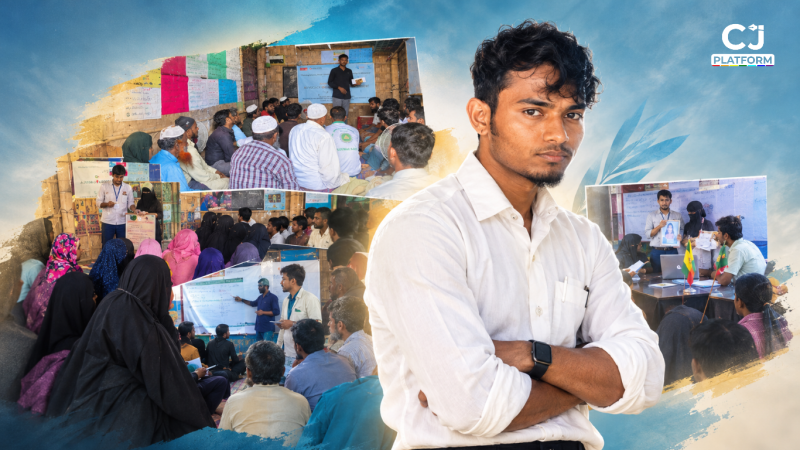
Forced to flee Myanmar in 2017, Shakil Akter has transformed his experiences of persecution and displacement into a commitment to documenting human rights violations, supporting survivors, and advocating for the safety and dignity of the Rohingya community in Bangladesh’s refugee camps. Despite threats and violence against his family, he continues his work, believing that lasting peace is impossible without respect for human rights.
A Life Shaped by Displacement and Determination
For many Rohingya refugees, displacement is not simply the loss of a homeland. It is also the loss of security, opportunity, family stability, and the freedom to live with dignity. For some, however, these experiences become the foundation of a commitment to protecting others.
Shakil Akter, a 24-year-old Rohingya human rights defender also known as “Peace Seeker Shakil,” is among those who have chosen to respond to adversity through advocacy and community service.
Now living in the refugee camps of Cox’s Bazar, Bangladesh, Shakil works to document alleged human rights violations, report cases to relevant stakeholders, support survivors, and encourage young people to participate in human rights protection. Through his involvement with Rohingya-led civil society initiatives, he has developed a network of community members committed to addressing violations and promoting a safer environment for vulnerable people.
His journey, however, has been shaped by the same insecurity and displacement that continue to affect the Rohingya community. His family’s experience of persecution in Myanmar, their flight to Bangladesh, and subsequent attacks against his father have reinforced his determination to speak out against injustice.
For Shakil, human rights advocacy is not merely a professional responsibility. It is a response to the experiences of his own community and a way of helping others who face similar hardships.
Early Life in Myanmar: A Family Legacy of Community Leadership
Shakil Akter was born in Kyet Yoe Pyine Village, Maungdaw Township, in Myanmar’s Rakhine State. He is the son of Akter Kamal and Noor Fatema, also known as Toha.
His family has a longstanding history of community leadership. His paternal grandfather, the late Habi Ahamed, reportedly served as a village administrator for 22 years across five consecutive terms. His uncles, Mustafa Kamal and Mg Mg Gyi, also held leadership roles in the village.
This family background exposed Shakil to a tradition of community service and responsibility. According to his account, his forefathers had worked for the betterment of the community, speaking up for local people and addressing their concerns.
Before the family was displaced, they also managed a well-known market in their village, a business that had reportedly remained under their family’s care for generations.
Despite these longstanding community connections, Shakil’s family was not spared the persecution and insecurity experienced by many Rohingya families in Myanmar. As violence and oppression intensified, they were ultimately forced to leave their homeland and seek refuge in Bangladesh.
The family’s displacement marked a profound turning point in Shakil’s life, separating him from the familiar surroundings of his childhood and the future he might otherwise have pursued in Myanmar.
Childhood, Education, and Family Responsibilities
Before displacement disrupted his life, Shakil followed a structured daily routine that combined religious education with formal schooling.
His day began with Fajr prayers, followed by Islamic studies at the local maktab and attendance at the village middle school, where he was studying in Grade 8.
As the eldest of five siblings, including two brothers and three sisters, Shakil occupied an important position within the family. He also experienced the loss of his mother at a young age, a tragedy that left the family facing significant emotional and practical challenges while his siblings were still young.
These early experiences of responsibility and hardship would later become part of the personal circumstances that shaped his understanding of vulnerability, family security, and the importance of community support.
Fleeing to Bangladesh in 2017
In 2017, escalating violence in Myanmar’s Rakhine State forced Shakil and his family to flee to Bangladesh, joining the large number of Rohingya seeking safety in the Cox’s Bazar refugee camps.
Crossing the border offered refuge from immediate dangers, but it did not bring an end to their struggles. Like many displaced families, they faced economic uncertainty, limited opportunities, and the difficulties of rebuilding their lives in an unfamiliar environment.
Without a stable source of income, the family struggled to meet its basic needs. Continuing Shakil’s education also required determination and financial sacrifice.
Despite these obstacles, he remained committed to his studies. He eventually completed the second year of higher secondary education at a community-led high school, overcoming considerable financial and personal difficulties.
His father, Akter Kamal, later secured employment with the Norwegian Refugee Council (NRC) as a mentor teacher, earning approximately 13,000 Bangladeshi taka per month. This income provided some financial stability for the family, although the challenges associated with refugee life remained substantial.
For Shakil, education and community engagement became important ways to move forward despite the limitations imposed by displacement.
Discovering a Purpose in Human Rights Advocacy
Shakil’s commitment to human rights developed from a combination of family influence, personal experience, and his observations of life in the refugee camps.
He witnessed how alleged human rights violations, intimidation, violence, and other harmful activities affected individuals and families. He also became increasingly concerned about the wider consequences of insecurity for community relationships and the social fabric of the Rohingya population.
The experiences of his own family gave these concerns a deeply personal dimension.
He explains his motivation in direct terms:
“I chose this field because I am a survivor, and my family is also a survivor of human rights violations.”
For Shakil, the decision to work on human rights was therefore not simply a career choice. It was an effort to respond to experiences of injustice and help prevent others from suffering similar harm.
Beginning in 2020, he participated in workshops and training sessions that strengthened his understanding of human rights, community protection, and advocacy. These opportunities helped him develop the knowledge and skills necessary to document incidents, communicate with stakeholders, and raise concerns about violations affecting the Rohingya community.
His work has focused on issues including gender-based violence, labour rights, and crimes against humanity, alongside broader human rights and protection concerns.
Over time, he moved from participating in learning opportunities to taking on responsibilities within Rohingya-led civil society organizations.
Building Experience Through Rohingya-Led Civil Society
In 2020, Shakil joined the Rohingya Youth Association (RYA), where he served as a camp coordinator.
The role provided opportunities to learn about human rights, social cohesion, gender-based violence, documentation, and reporting. Through in-person workshops and training sessions, he gained experience in identifying concerns affecting the community and understanding how information could be documented and communicated to relevant stakeholders.
He reports having participated in more than 12 training sessions covering human rights and related social and protection issues.
His involvement with RYA also strengthened his understanding of the contribution that Rohingya-led civil society organizations can make to community awareness, youth participation, and the identification of protection concerns.
Working directly with community members helped him recognize that effective advocacy requires more than identifying violations. It also requires listening to affected people, understanding their circumstances, treating their experiences with respect, and helping connect their concerns with appropriate reporting and support mechanisms.
These experiences laid the groundwork for his subsequent responsibilities in research, documentation, and advocacy.
Expanding His Work Through the Rohingya Youth Advocacy Network
In 2023, Shakil took on another responsibility when he was offered the position of Program Coordinator at the Rohingya Youth Advocacy Network (RYAN).
In this role, he has worked to expand youth participation in human rights activities and strengthen community-based efforts to research, document, and report alleged violations occurring in the refugee camps.
His responsibilities include coordinating a team of community members, encouraging young people to work collectively, and helping build a wider network for identifying and reporting protection concerns.
Through these efforts, Shakil has sought to create opportunities for young Rohingya to contribute to human rights advocacy, despite the social, economic, and security challenges they face.
His approach emphasizes collective action. Rather than treating documentation and advocacy as the responsibility of a small number of individuals, he encourages young people to develop the skills and confidence needed to contribute to community protection.
Reflecting on the value of this work, he says:
“Working with such a team has brought me two major benefits. First, I have developed my own understanding of human rights. Second, I have learned to understand and support others. Every day, I communicate with new people, listen to their experiences and emotions, and build a wider network within the refugee camps. This network empowers people to work together on human rights.”
His account highlights an important dimension of community-based advocacy: the process of documenting violations can also help develop the knowledge, relationships, and collective capacity needed to address them.
For Shakil, every conversation with an affected individual is an opportunity to understand a person’s circumstances and identify concerns that might otherwise remain unreported.
Documenting Violations and Supporting Survivors
A central part of Shakil’s work involves collecting information about alleged human rights violations and reporting cases to relevant stakeholders.
He says that he has documented more than 5,000 human rights violation cases during his work. He also reports that some survivors whose cases he documented have subsequently become safer and are now able to communicate with him regularly.
These figures and outcomes reflect his own account of his work. They also illustrate the scale of the documentation effort he describes and his commitment to remaining connected with people who have shared their experiences.
For human rights defenders working in refugee settings, documentation can play an important role in making violations visible. Carefully collected information may help humanitarian organizations and other relevant stakeholders understand emerging protection concerns, identify patterns of abuse, and consider appropriate responses.
However, documenting cases in an insecure environment requires considerable care. Survivors may fear retaliation, social stigma, or further harm if their experiences become known. Responsible documentation must therefore prioritize informed consent, confidentiality, secure information handling, and the safety of affected individuals.
Shakil’s work places him in regular contact with people who may be experiencing fear, distress, or uncertainty. Listening to them requires sensitivity, while reporting their cases requires attention to accuracy and the potential consequences of sharing information.
He believes that the purpose of human rights advocacy is ultimately to help people live safely and peacefully, with the freedom to make decisions about their own lives.
Explaining why he remains committed to the work, he says:
“I feel very proud to have chosen the field of human rights. Through my activities, I have documented more than 5,000 cases of human rights violations and reported them. Among the cases I have documented, some survivors are now safer and continue to communicate with me. Their appreciation means a great deal to me. I believe it is essential for every person to be safe, to have choices, and to live peacefully. Human rights violations must stop if our society is to achieve peace.”
His words reflect the central belief behind his work: that security, dignity, freedom of choice, and peace are inseparable from respect for human rights.
Continuing His Professional Development
Shakil’s work has extended beyond his responsibilities at RYAN.
In 2025, he received an opportunity to work as a case management worker through a project under the Rohingya Advocacy Center (RAC). The project has since ended.
The experience provided another opportunity for him to engage with issues affecting vulnerable people and strengthen his understanding of case-related support within the humanitarian context.
In 2026, he joined the Human Rights Research and Advocacy Centre (HRRAC), a refugee-led initiative working across the Bay of Bengal region.
He currently serves as a Human Rights Research Associate, contributing to work focused on human rights research, documentation, and advocacy.
These roles represent different stages in his development, from youth participation and community coordination to research and documentation within a broader regional framework.
Throughout this progression, his central focus has remained consistent: understanding the challenges faced by vulnerable communities, documenting alleged violations, and contributing to efforts to protect human dignity.
His experience also illustrates the potential contribution of Rohingya youth to humanitarian and human rights initiatives. Young people who understand their community’s language, circumstances, and social environment can play an important role in identifying concerns and communicating the experiences of affected people, provided they have the necessary training, support, and protection.
Violence Against His Father: A Personal Experience of Insecurity
Despite his commitment to protecting others, Shakil’s own family has experienced serious violence.
In 2023, according to his account, his father was shot in the left leg during an incident involving armed group members.
At approximately 10 p.m., Akter Kamal was at a shop preparing to watch a football match on television when a group of armed men arrived and began firing toward the shop. A bullet struck his left leg.
The incident added another painful chapter to a family history already marked by persecution and displacement.
For Shakil, the reported shooting of his father reinforced the reality that insecurity in the refugee camps can affect not only those directly engaged in advocacy but also their relatives and wider community networks.
A further incident reportedly occurred on 12 September 2026.
According to the account provided by Shakil, he was away from the family shelter at approximately 9 p.m. when a group of eight unidentified individuals arrived and asked his father about his whereabouts.
His father reportedly refused to provide information about his son. The individuals then allegedly assaulted him without further explanation.
Community members came out after the incident began, and the group reportedly fled.
The circumstances described raise serious concerns about the safety of Shakil and his family. However, the identities and motives of the individuals involved, as well as any connection between the incidents and Shakil’s human rights activities, would require independent verification.
The reported assault also illustrates the wider vulnerability of families living in an environment where intimidation and violence can create fear and discourage people from speaking openly about their concerns.
For a human rights defender whose work depends on communication with survivors and community members, such incidents can have consequences extending beyond the immediate victim. They can undermine a sense of security, place pressure on relatives, and make the already difficult task of reporting violations more dangerous.
Shakil’s family has experienced the consequences of displacement, economic hardship, and reported violence. Yet he continues to work on human rights issues affecting the wider community.
Choosing Advocacy Despite the Risks
The decision to continue human rights work in an insecure environment is not without personal consequences.
Human rights defenders may face intimidation, threats, harassment, and pressure because of their efforts to document violations or raise concerns. Those working in refugee settings may also face limited resources, restricted opportunities, and difficulties accessing effective protection mechanisms.
For Shakil, these challenges exist alongside the ordinary responsibilities of family life and the uncertainty associated with prolonged displacement.
His father’s reported experiences of violence make the risks particularly personal. Nevertheless, Shakil has continued his involvement in research, documentation, and advocacy through the organizations with which he works.
His persistence reflects a belief that remaining silent about violations will not create the peaceful and secure community that Rohingya refugees need.
At the same time, his experience points to the importance of ensuring that human rights defenders can carry out their work without intimidation or retaliation. Their safety is essential not only for their own well-being but also for the people who depend on them to raise concerns and communicate experiences of abuse.
Human rights organizations, humanitarian agencies, and other relevant stakeholders have an important role in promoting safe reporting channels, strengthening protection measures, and ensuring that allegations of violence receive appropriate and impartial attention.
The safety of human rights defenders and their families should not depend on whether they are willing to abandon their work.
The Role of Rohingya Youth in Building a Safer Community
Shakil’s journey also highlights the contribution that young Rohingya can make to human rights protection and community development.
Despite years of displacement and the limitations affecting access to education, employment, and professional development, many Rohingya young people continue to seek opportunities to support their communities.
Through civil society initiatives, training programmes, research, documentation, and advocacy, they can help identify protection concerns, improve community awareness, and encourage constructive engagement with relevant stakeholders.
Shakil’s work demonstrates how participation in training and community organizations can provide a pathway toward more sustained involvement in human rights activities.
His experience also emphasizes the value of collaboration. Building networks of trained community members can broaden the ability to identify concerns, document information responsibly, and communicate emerging risks.
However, such efforts require more than individual determination. Sustainable human rights work depends on access to training, adequate resources, institutional cooperation, and meaningful protection for those who undertake it.
For Rohingya youth, the opportunity to contribute to their community should be recognized as an important part of humanitarian response and long-term social development.
Their participation can help ensure that the experiences, concerns, and priorities of Rohingya refugees are heard and understood.
A Vision Grounded in Human Dignity and Peace
At the centre of Shakil Akter’s work is a straightforward conviction: people should be able to live without fear, enjoy their fundamental rights, and make decisions about their own lives.
His journey from Kyet Yoe Pyine Village in Myanmar to the refugee camps of Bangladesh has exposed him to displacement, uncertainty, and the consequences of violence. Rather than allowing these experiences to define only his suffering, he has sought to turn them into a source of motivation for helping others.
Through his work with the Rohingya Youth Association, the Rohingya Youth Advocacy Network, the Rohingya Advocacy Center, and the Human Rights Research and Advocacy Centre, he has pursued opportunities to learn, document cases, coordinate with others, and contribute to human rights advocacy.
His reported documentation of thousands of cases reflects the scale of the work he says he has undertaken. His continued contact with survivors also demonstrates the importance he places on the people behind the reports.
Yet his story is not simply one of professional development. It is also a reminder that the people who document and report violations may themselves live with insecurity and vulnerability.
The reported attacks against his father raise questions about the safety of his family and the conditions in which he continues his work. Those allegations warrant careful attention and independent verification, alongside appropriate measures to protect those potentially at risk.
For Shakil, however, the purpose of human rights advocacy remains clear. He believes that a peaceful society cannot be built while people continue to experience violence, intimidation, exclusion, or the denial of their fundamental rights.
His commitment reflects the determination of a young Rohingya human rights defender seeking to make a difference in a community that has endured years of persecution and displacement.
Looking Ahead
Shakil Akter’s story is one of resilience, but resilience should not be mistaken for an obligation to endure violence or insecurity without support.
His experience highlights the need for stronger protection for Rohingya refugees, meaningful opportunities for young people, and safe conditions for those documenting human rights violations.
It also underscores the importance of ensuring that reports of violence are handled responsibly, that survivors can seek support without fear, and that allegations of abuse are examined fairly.
As Shakil continues his work in human rights research and advocacy, his experience offers a perspective on the role of Rohingya youth in documenting community concerns and pursuing a future grounded in dignity and justice.
His journey began in a village in Myanmar, continued through forced displacement to Bangladesh, and developed into a sustained effort to support vulnerable people through research, documentation, and advocacy.
Despite the difficulties he and his family have faced, he continues to believe that a safer future is possible.
For Shakil Akter, human rights are not abstract principles. They concern whether a person can live without fear, whether survivors can speak about their experiences, whether families can remain safe, and whether every individual can enjoy dignity and freedom.
His message is ultimately a call for a society in which no one has to suffer in silence and where the protection of human rights becomes a shared responsibility.
As he continues his work, the challenge extends beyond one individual or organization. It is a responsibility for all relevant stakeholders to help create conditions in which Rohingya refugees can live safely, young people can contribute meaningfully to their communities, and human rights defenders can carry out their work without fear of violence or retaliation.
For Shakil Akter, the pursuit of peace begins with the protection of human rights—and continues for as long as people remain vulnerable to their violation.
About the Author
- Ro Maung Shwe
A writer, journalist, human rights defender, and community advocate committed to human rights, social justice, and humanitarian issues affecting the Rohingya community.
Author’s Note: This article is based on information provided by Shakil Akter and verified by the author regarding his organizational affiliations and the reported attacks against his father. Shakil is a young Rohingya human rights defender who has been actively advocating for human rights since an early age.