

Water Crisis Atop Billion-Dollar Jade Deposits
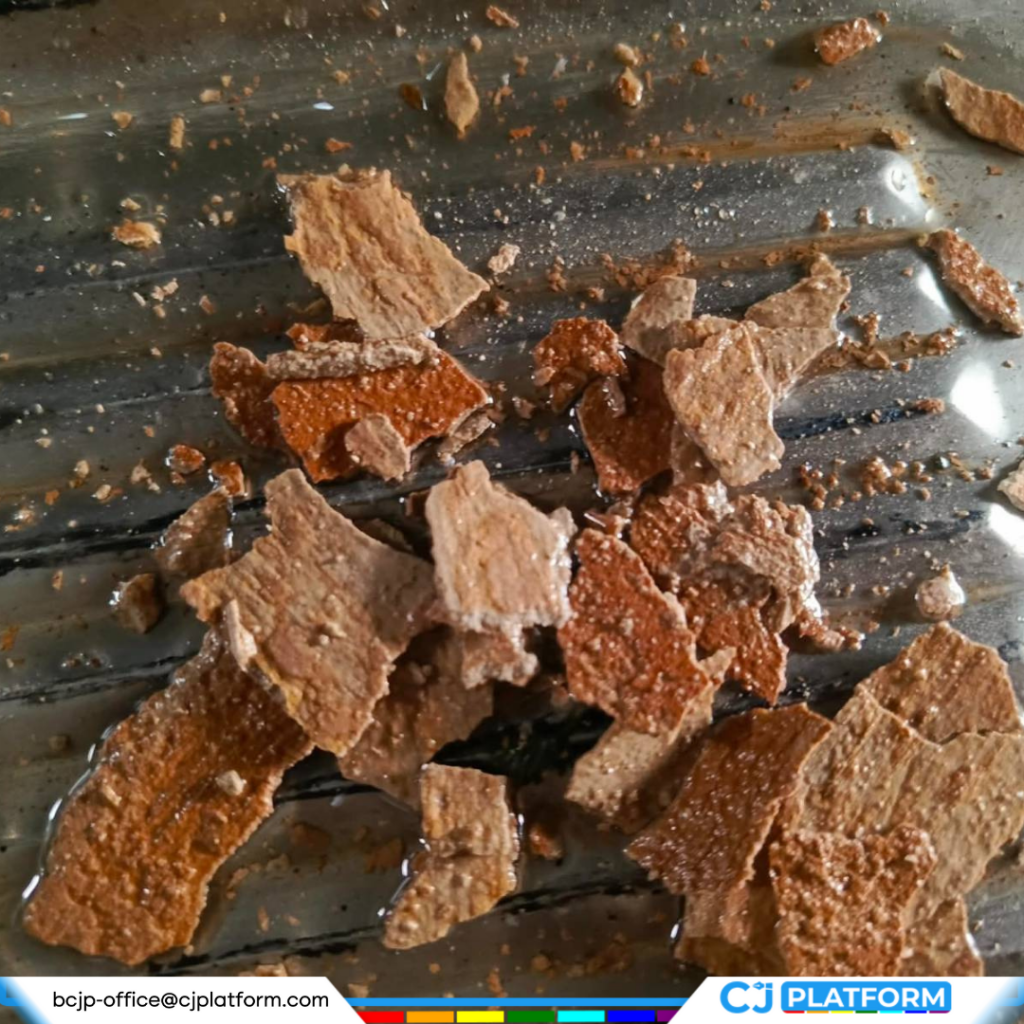
When Ko Naw Naw, a resident of Hpakant in Kachin State, opens the lid of his kettle, the sight inside would shock anyone from outside the region: the water has solidified into thick chunks of limescale.
“If the same water is boiled and used for just two or three days, it turns into solid deposits. The lime content is so high that our daily lives have become incredibly difficult,” Ko Naw Naw said.
For locals, however, this is no longer a surprise. Beyond the high mineral content, the population is grappling with severe water scarcity. A 58-year-old resident echoed these concerns: “The water in Hpakant is no longer drinkable. It leaves our hair brittle and dry, and we are seeing a sharp rise in kidney disease across the community.”
Although the 2014 census recorded over 310,000 residents in Hpakant, locals report that the vast majority still struggle to access potable water. Residents trace the crisis back to the late 1990s, when mining companies began using heavy machinery. Since then, the Uru Creek—Hpakant’s primary waterway—has been devastated. This environmental destruction, combined with the depletion of other natural sources, has created a persistent crisis that remains unresolved.
While numerous reports on Hpakant cover environmental issues like landslides, the lack of rule of law, and corruption among local authorities linked to jade mining, a definitive study on the extent of water scarcity remains missing. Consequently, it is difficult to determine exactly when the region’s water resources reached this level of degradation.
A 28-year-old resident of Nammaphyit village explained that the community currently relies primarily on wells and mountain runoff. “In our area, we draw well water for household use, but we are forced to buy bottled water for drinking,” she said. “Some people still drink the well water despite its extremely high lime content. When the wells run dry, we have to scramble to find water from other sources and use it very sparingly.”
To address this crisis on their own, some residents have installed pipes to draw mountain water, charging others between 1,000 and 1,500 Kyats per unit.
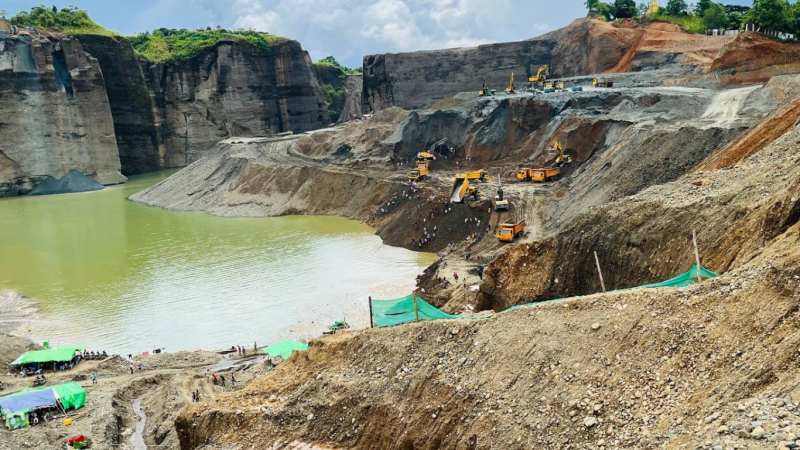
In areas of active gold and jade mining, locals report being forced to use backhoes to re-dig old mining pits and ponds just to find water for consumption. However, they remain unaware of the water’s safety or the presence of dissolved chemicals, as these pits were never intended for drinking.
Moreover, no administrative body has taken responsibility for water distribution in Hpakant. Instead, local communities and companies manage on a small scale by piping in mountain water to cope with the shortage. As armed conflict intensifies between the KIA (Kachin Independence Army) and the junta, the civilian population is left to resolve the water crisis entirely on their own—especially in territories split between the two forces, such as KIA-controlled Hseng Taung.
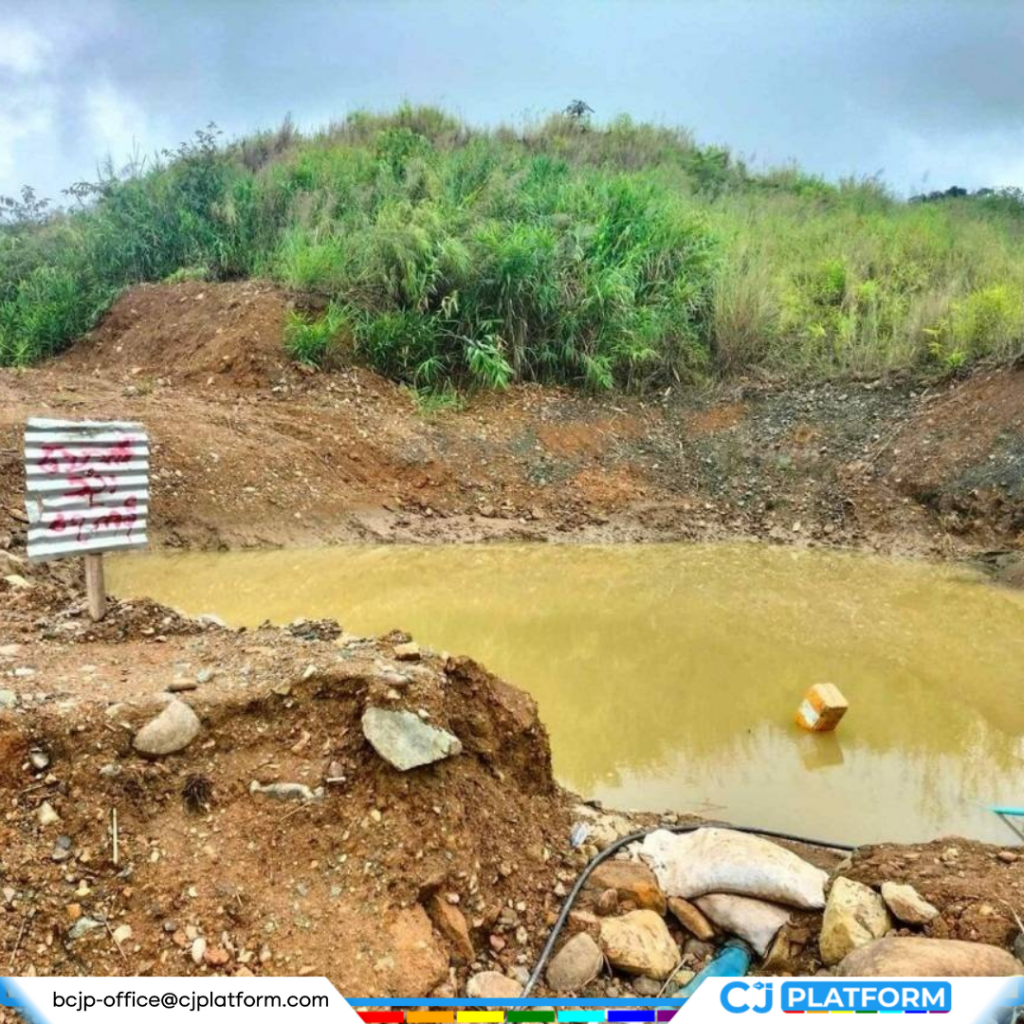
An administrator from the junta regime, speaking on the condition of anonymity, admitted that despite the massive tax revenues generated in the area, the local water crisis remains unresolved. “This region generates an enormous annual income and significant tax revenue. However, basic infrastructure development, such as water and roads, has not been systematically implemented. In some villages, residents have had to cooperate on a self-reliant basis to pipe in and use mountain runoff,” the official said.
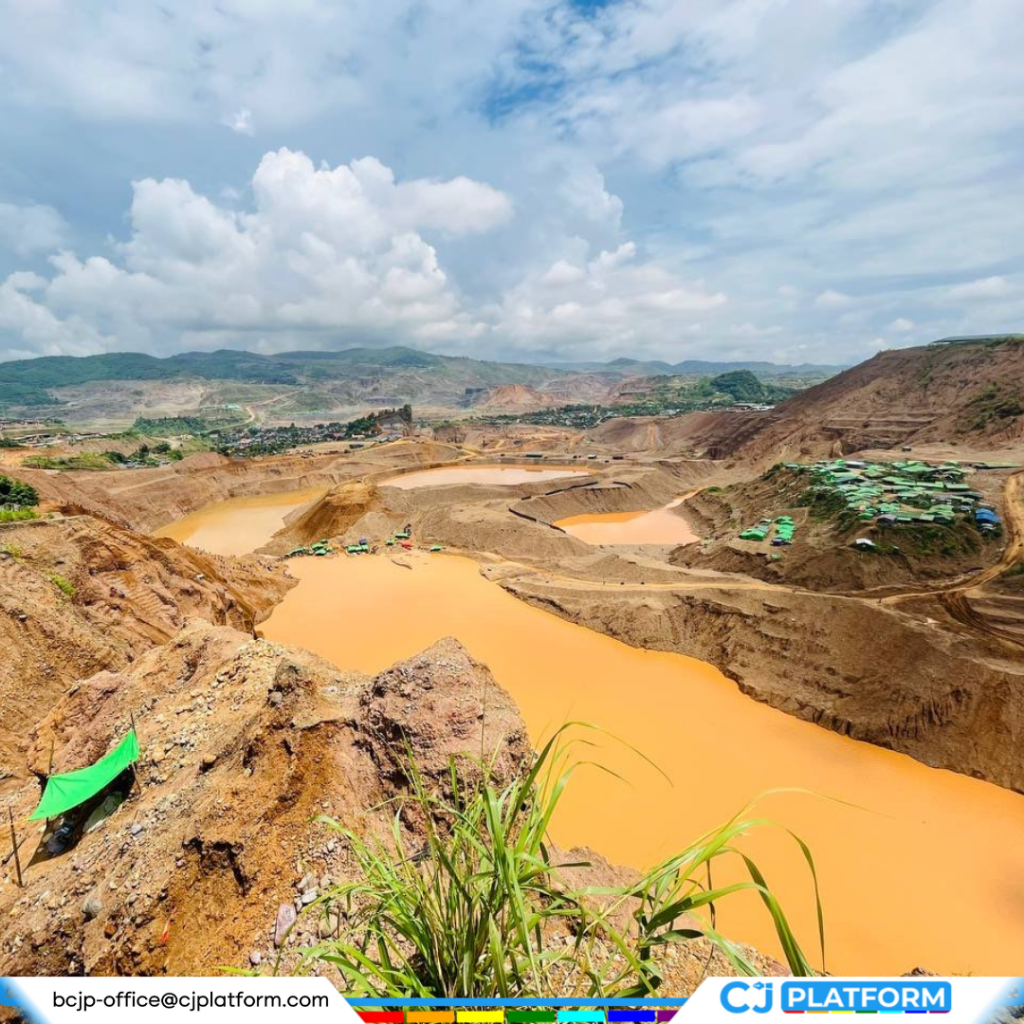
According to a 2024 report by the Myanmar Mining Watch Network (MMWN), women in Hpakant must make multiple trips to collect water from sources far from their homes, leading to physical exhaustion, significant loss of time, and ongoing health problems. The report further states that reckless mining activities by gemstone companies are causing the loss of vital water resources.
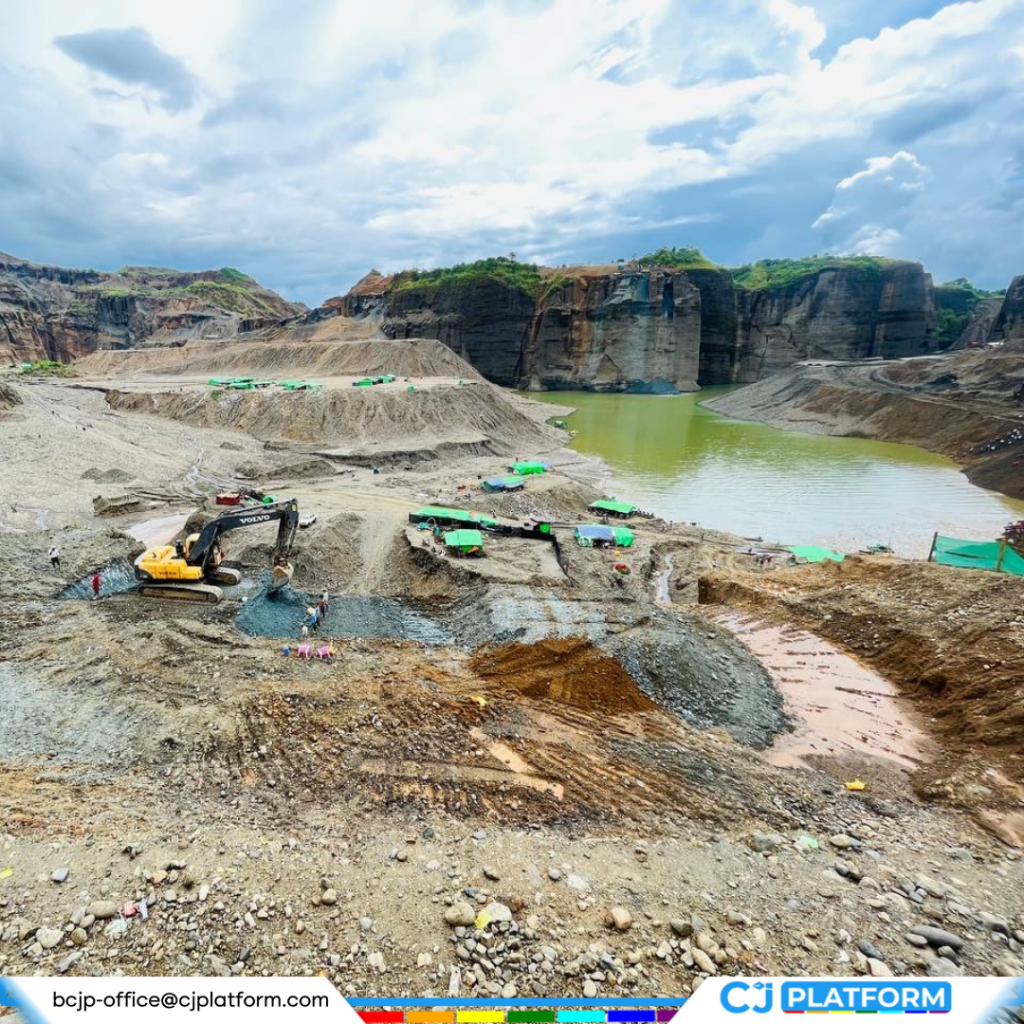
Locals believe that because Hpakant is naturally a rocky region with high lime content, unsystematic excavation—particularly the daily use of heavy explosives to blast mountains for jade—has destroyed the ecosystem and exacerbated the water crisis. They contend that during the rainy season, lime from these blasted rocks dissolves and accumulates in water sources, leading to high lime concentrations and the eventual depletion of usable water.
Ko Paul from the Kachin State Environmental Conservation Watch (KEJC) urged the relevant authorities from both the regime and resistance forces to address Hpakant’s water scarcity.
“Companies and authorities should take responsibility for finding a solution. NGOs and CSOs also need to provide public awareness regarding water safety,” he stated.
Before the 1990s, prior to the arrival of companies using heavy machinery, locals could easily rely on the Uru Creek for their drinking and domestic needs. Today, however, the Uru Creek remains little more than a toxic waterway.
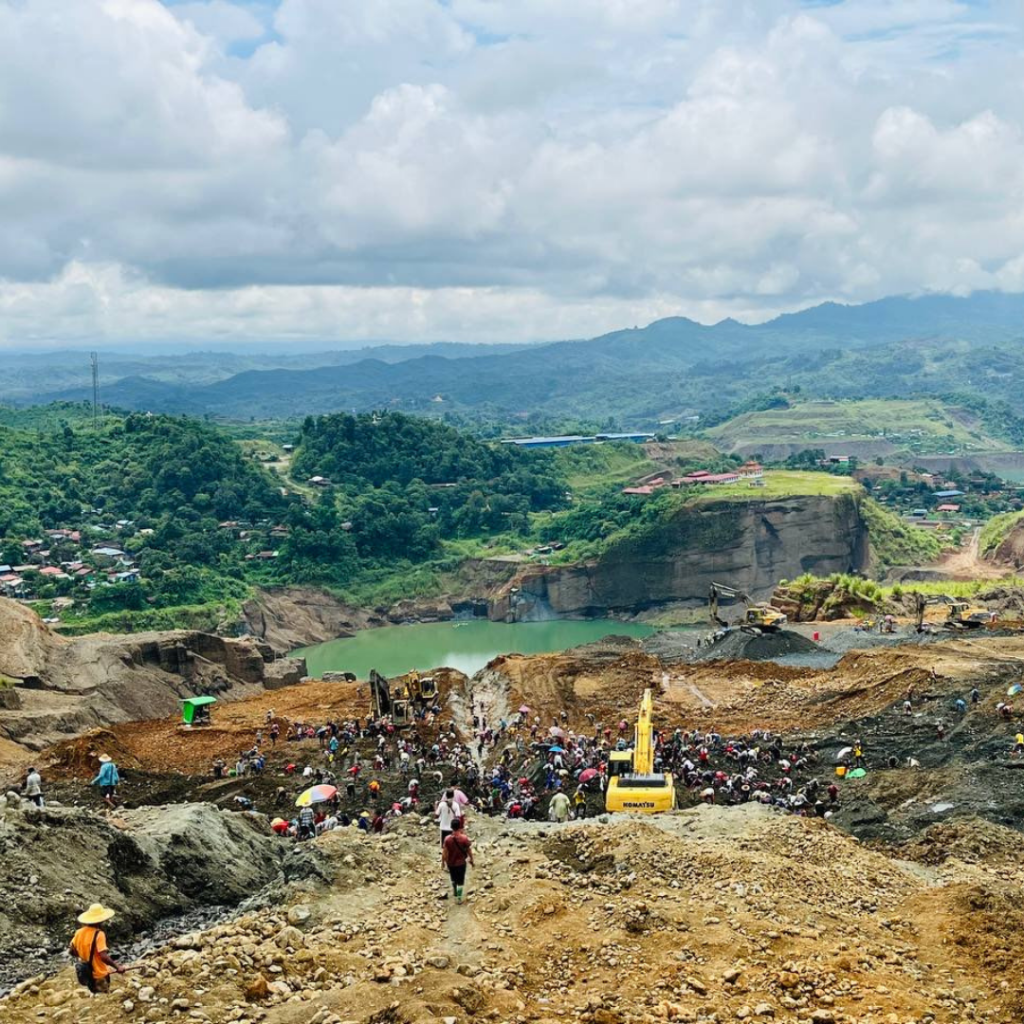
Reports by Global Witness reveal that while billions of dollars are generated annually in Hpakant, the question of who is responsible for the persistent failure to resolve the water crisis remains unanswered. Hpakant serves as a vital hub for Myanmar’s invaluable mineral treasures; yet for the local population, the irony of living atop billions of dollars’ worth of jade while lacking access to water for basic needs remains a situation that continues to go unaddressed by those in power.
(Some names have been changed to ensure the security of local residents.)
“This story was supported by Internews’ Earth Journalism Network”