

Myanmar Junta Legalizes Warrantless Searches and Arrests Ahead of Planned Government Transition
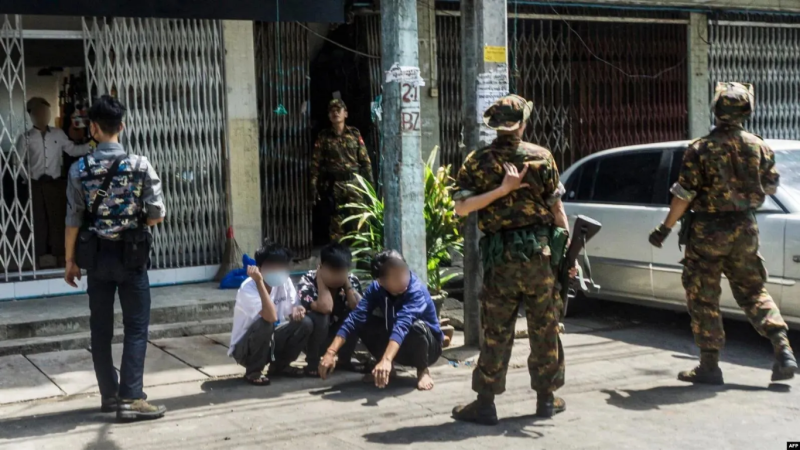
The Myanmar military junta has amended the “Law Protecting the Privacy and Security of Citizens” to ensure its forces can continue to conduct arbitrary arrests and searches even after a planned transition to a new puppet government.
According to an announcement on February 3, the junta has modified key provisions of the law, commonly known in Myanmar as the (Naing-Lut-Lone) law, which was originally intended to safeguard the fundamental rights of citizens.
Shortly after the February 2021 coup, the junta suspended several critical sections of this law: Section 5 (prohibiting arrests and searches without local authorities or warrants), Section 7 (limiting detention without a court order to 24 hours), and Section 8 (protecting against illegal surveillance, property seizure, and the interception of private communications).
In the latest amendment, the junta specifically revised Section 5(b) and the preamble of Section 8. The new language grants authorities the power to conduct searches and arrests without a warrant or the presence of witnesses if deemed “essential for national defense, security, and public tranquility.” Notably, Section 7—which restricts detention beyond 24 hours without a court order—remains absent from the amendment, suggesting that the junta intends to maintain its power of indefinite detention.
Political analysts view these legal maneuvers as a preemptive strike to ensure that the projected “new” administration can continue to suppress dissent under the guise of national security.
The move follows a 2025 declaration by the National Defense and Security Council (NDSC), stating that the junta would continue to exercise supreme legislative, executive, and judicial powers until a new parliament is formed.
Observers also link this amendment to the recently enacted “Union Advisory Council Law.” By positioning himself as the potential chairman of this new council, junta leader Min Aung Hlaing is seen as consolidating both military and political power to maintain absolute control over the post-election landscape.
Note: This news has been translated and presented using AI.