

What Future Awaits a Yangon That Is Over-Extracting Its Groundwater?
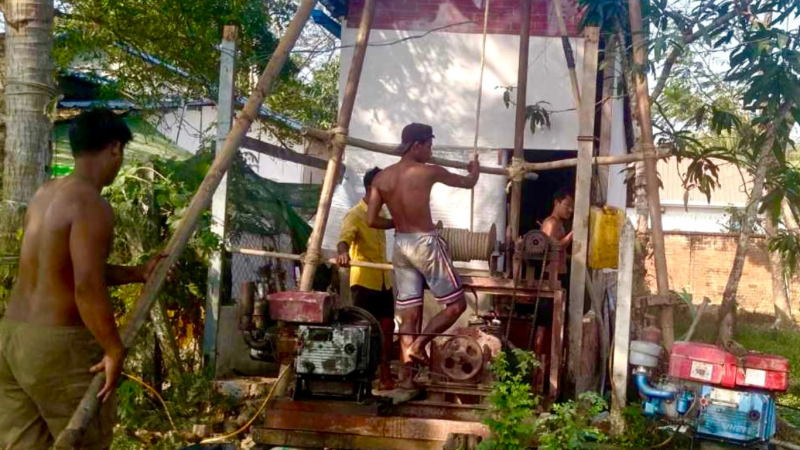
The water appears clear, yet it carries a brackish, salty taste. Washing one’s face brings no refreshment, only the sensation of skin damage. Even washbasins are coated in blue-green mossy stains under the constant exposure to saline water.
This is not a scene from a coastal village, but the daily reality for apartment residents in Kyimyindaing Township, right in the heart of Yangon.
“Some apartments re-dug wells in the same lane, but the water turned salty again. Over in Ahlone, it’s even worse and only saltwater comes out. Even if you dig a new well, it is still salty,” says a woman who has lived in Kyimyindaing Township for 35 years.
Her testimony highlights the “invisible underground danger” facing the city and the growing crisis of “saltwater encroachment along the Yangon riverbanks.”
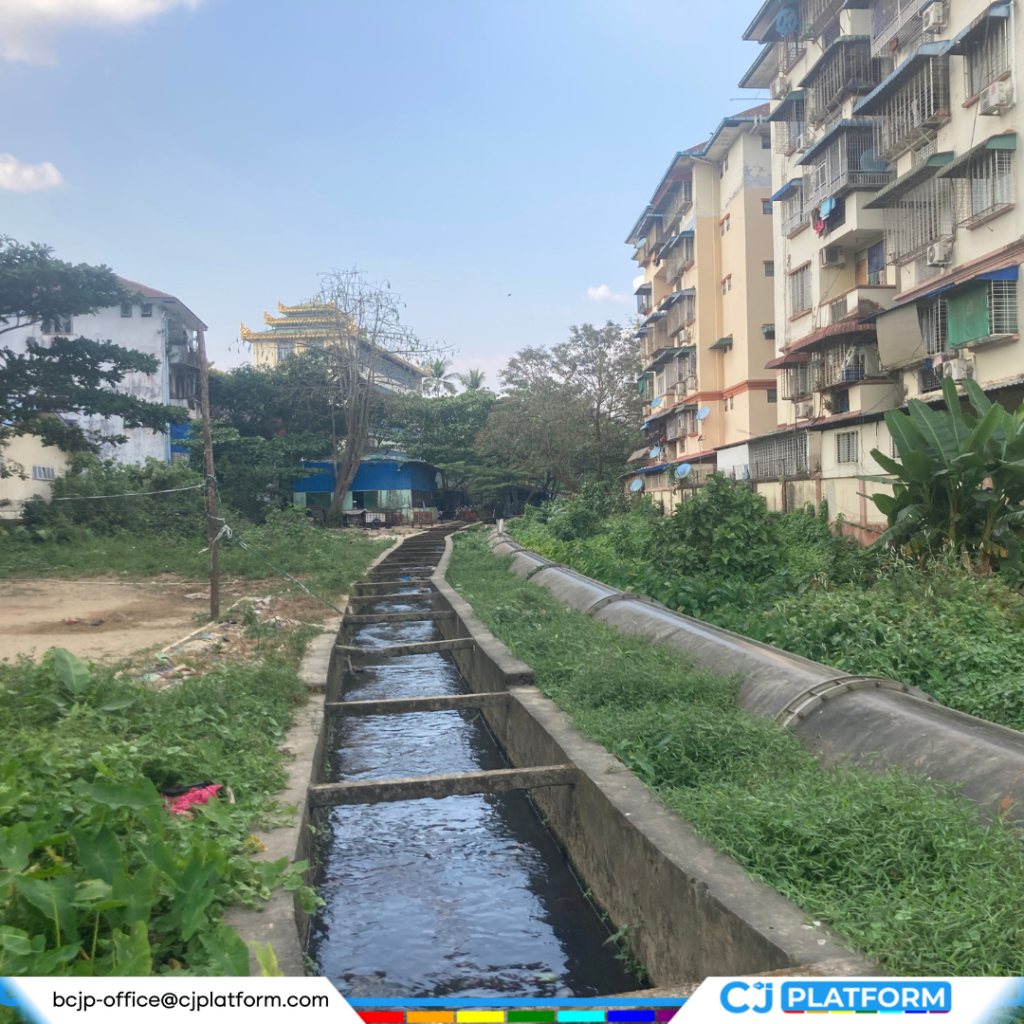
Forced Reliance on Groundwater
Due to irregular electricity supply and insufficient municipal water (known locally as “Jo Phyu” water), the public has been forced to rely primarily on groundwater.
“At first, we used Jo Phyu water. Even when we lived in a standalone house, we used it. But supply later became rare. Even when it comes, it is on a timer, and if there is no electricity at that time, we can’t pump it. Because of the inconvenience of limited supply and high usage, everyone eventually ended up digging their own tube wells,” she explains.
A Regulatory Vacuum
Environmental experts estimate there could be around 300,000 tube wells in Yangon, yet there are no precise statistics and no specific laws to control them.
“You may have heard the saying, ‘A floor without a frame is chaotic.’ It is exactly like that here,” assesses U Myint Thein (Maung Kyay Yay), a Groundwater Consultant.
“There are no laws, bylaws, or regulations regarding groundwater and tube wells. It is a country where diggers just dig if they agree on a price with the owner; no one needs to ask permission from any organization.”
As a direct consequence of this unregulated extraction, the problem of Land Subsidence has now emerged, according to experts and research papers.
A study by Singapore’s Nanyang Technological University (NTU) warns that between 2014 and 2020, parts of Yangon experienced land subsidence ranging from 0.01 cm to 7.5 cm annually. The study identified South Dagon Township as the worst-affected area, sinking at a rate of 7.5 cm per year.
However, U Myint Thein points out technical nuances: “The maximum and minimum range given for subsidence is too wide. Also, there must be a basic Reference Level. I would like to ask; what was the surface level in 2014, and from which level did the value drop?”
A resident of over 30 years in South Dagon shares his experience:
“Since the roads were bad, they kept layering concrete, making the mass huge and the roads higher. Houses ended up lower than the road, so we had to raise them. It is a major difficulty for those who cannot afford it.” Watching news on YouTube about groundwater depletion, he admits, “I am truly afraid that fresh water will dry up and saltwater will enter.”
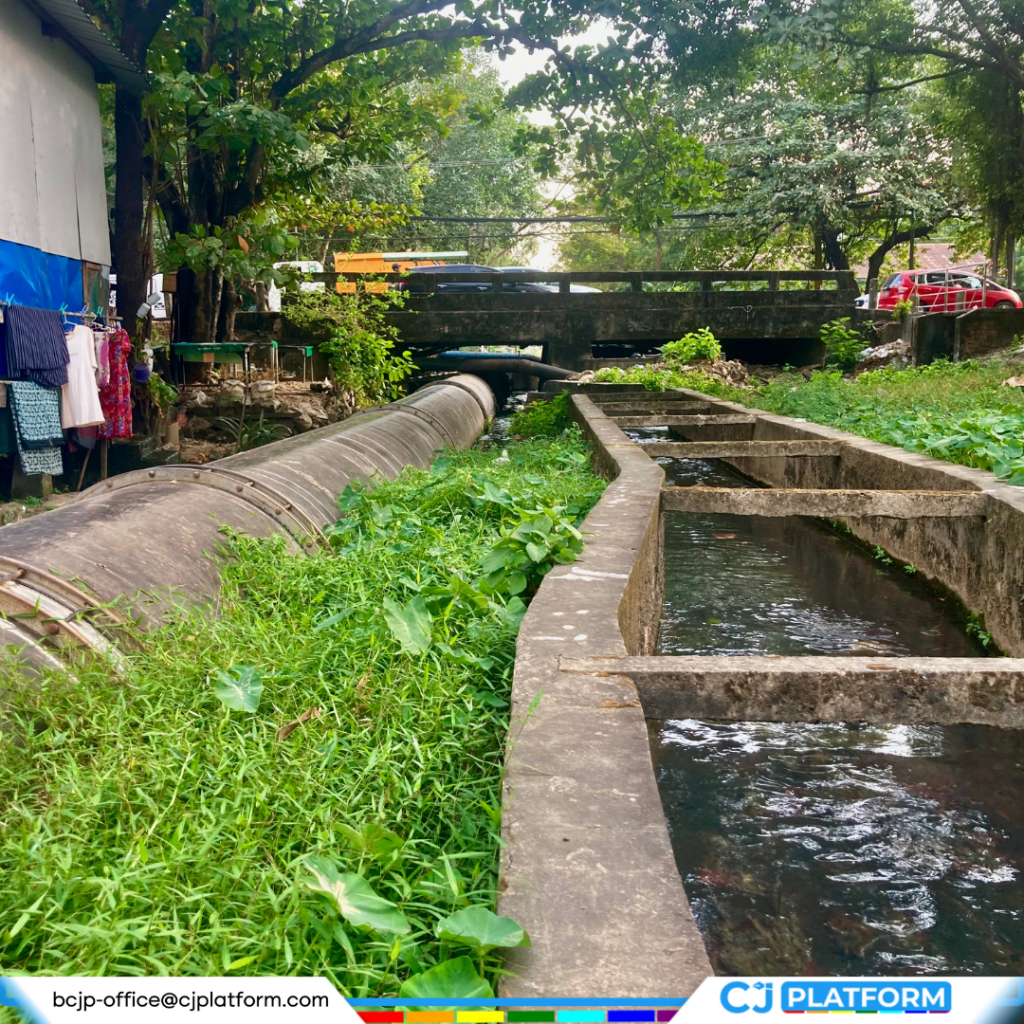
The Vicious Cycle of Salinity
“Due to groundwater usage, some regions and wards are experiencing saltwater intrusion, making the water unusable,” says Seismologist Dr. Myo Thant.
Groundwater Consultant U Myint Thein warns that areas along the Yangon, Bago, and Pan Hlaing rivers, especially high-density areas with high-rise buildings, face the most severe threat. Replacing fresh water by encroaching seawater is becoming the most obvious danger for Yangon.
When fresh water becomes scarce, people dig deeper wells.The reason for this is that as the depth increases and the soil composition changes, the quality of the groundwater stored there also shifts. According to geological and hydrogeological principles, water quality varies depending on the age of the geological formation.
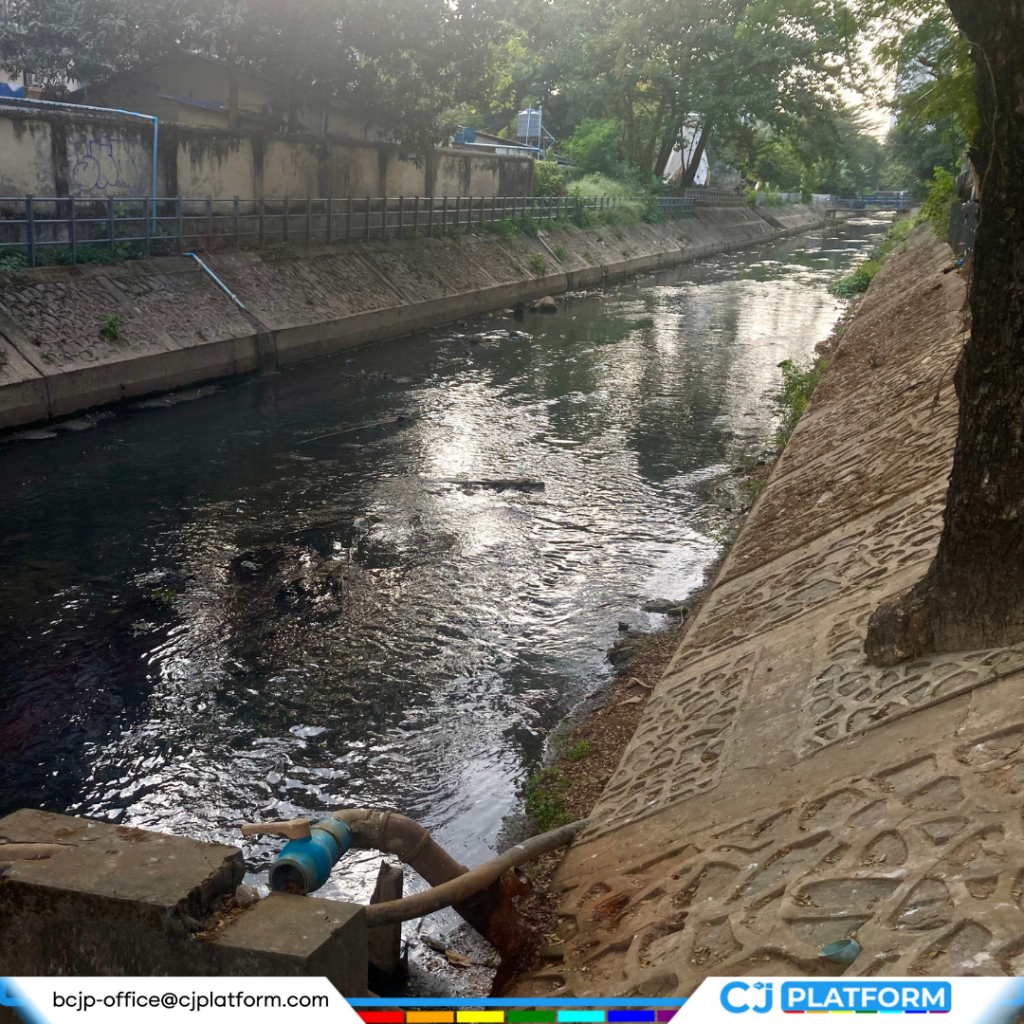
Inviting Earthquake Risks
Experts also warn that groundwater over-extraction poses earthquake risks.
“After the strong earthquake on March 28, 2025, we must be cautious of the Bago Segment, located at the Southern tip of the Sagaing Fault. If it slips, cities like Bago and Yangon will be heavily affected,” warns Dr. Myo Thant.
Geologically, the Western side of Yangon (Hlaing, Kamayut) has solid soil, while the eastern side (South Dagon, North Dagon) consists of soft soil. “Soft soil has the property of amplifying earthquake waves, meaning the impact on Yangon could be massive,” Dr. Myo Thant adds.
Furthermore, most Yangon apartments are built with “soft stories” (open ground floors for parking without walls), making them structurally vulnerable. Experts advise that since many tube wells are dug close to building foundations (under staircases or beside walls), precautionary measures are essential to prevent catastrophic damage during an earthquake.
Lessons from Neighbors and Lost Projects
In contrast, neighboring Thailand has enforced groundwater laws and regulations for years. Hydrogeologists lead teams to calculate recharge and discharge rates annually. They utilize a Real-Time Groundwater Monitoring System with water meters to control extraction, allowing only licensed diggers to operate. This has successfully curbed land subsidence in Bangkok.
In Myanmar, U Myint Thein points out that there has been no controlling law for groundwater extraction since 1988 and now it was 37 years ago.
A Groundwater Management Bill released for public consultation in 2019 was scheduled for presidential approval in the new 2021 parliament, but it was stalled due to the military coup and remains un-enacted. Similarly, the National Water Law is stuck at the fourth draft stage under the military administration.
Prior to the military takeover in February 2021, a suite of major international initiatives had been set in motion to overhaul the city’s water infrastructure and disaster preparedness. These included the JICA-funded Greater Yangon Water Supply Improvement Project and the World Bank-backed Myanmar and Southeast Asia Disaster Risk Management Project, supported by a US$116 million loan. Additionally, the Asian Development Bank (ADB) had committed $180 million for the Yangon City Water Resilience Project, while joining forces with the World Bank to provide a $100 million loan for the Ayeyarwady Integrated River Basin Management (AIRBM) Project.
Specific initiatives included piping drinking water from the Ngamoeyeik Dam to Downtown Yangon, the Greater Yangon Sustainable Groundwater Supply Project, and the Delta Groundwater Monitoring System Pilot Project, which were set to launch in 2021 with assistance from the Netherlands.
However, the 2021 military coup halted all these projects. Foreign experts departed, and international loans and funding were suspended.
“The Yangon City Development Committee (YCDC) originally planned to halt groundwater extraction once they could fully supply water from the Ngamoeyeik Dam. But since they cannot meet the demand, they are forced to dig more tube wells even today. Previously, there were over 450 municipal supplementary wells; now, that number has exceeded 500,” U Myint Thein says, explaining the regression following the suspension of international projects.
“The country is under military junta, there is no groundwater law, and people are struggling just for their livelihood…. who can come and do this work? It is in a state where nothing can be controlled or fixed,” he continues.
A Call for Community Action
With national-level disaster preparedness weakened by the political situation, and the population of Yangon swelling with IDPs and job seekers, groundwater extraction has skyrocketed.
“If we continue like this… within the next 5 to 10 years, the groundwater level could drop, yields could decrease, quality could degrade, and the saltwater intrusion area could widen because no one knows how much is being recharged versus the increasing discharge,” U Myint Thein details the grim forecast.
Experts stress that raising awareness is a hollow exercise without viable alternatives
“Giving awareness is fine, but if the municipal supply cannot provide an alternative source, telling people to reduce use is like saying
‘If you have no bread, eat cake,'” notes a writer on the subject. “We can say don’t use groundwater,’ but there must be a substitute source available.”
The 35-year resident of Kyimyindaing sums up the desperate pragmatism of the public: “Water is essential. If tube well water is salty, use Jo Phyu. If that’s not enough, collect rainwater.” Her voice reflects the struggle of the entire city facing salinity, subsidence, and seismic risks.
No longer an option
“Without laws, stability, or data, and with climate change accelerating, we will face unexpected water scarcity and quality degradation in the not-so-distant future,” U Myint Thein warns.
With international projects stopped and strong laws absent, continuing with current uncontrolled extraction practices is no longer an option. Now is the time for officials, experts, businesses, and the public to collaborate on community-based water management systems and immediate alternative sourcing.
Collective power is the only way to overcome Yangon’s invisible underground danger.
“This story was supported by Internews’ Earth Journalism Network”